


The Austrian capital is also famed for its café culture, which UNESCO inscribed on the country’s National Inventory of Intangible Cultural Heritage in 2011. In Vienna’s historic centre, Café Central is the very embodiment of this tradition. Over its 150-year history, it has hosted legendary figures such as Leon Trotsky and Sigmund Freud. It remains one of the city’s most popular cafés — and, as one might expect, queues at its door are often long.
It was here that I first discovered what is perhaps Vienna’s most beloved coffee: the Wiener Melange (espresso with hot milk and milk foam). I also particularly enjoyed the Franziskaner — espresso with hot milk topped with a velvety layer of whipped cream.
Vienna’s coffee scene, however, has evolved. In recent years, specialty coffee shops have appeared across the city. Among the standouts is Gota Coffee Experts — “gota” meaning “drop” in Spanish — run by siblings Markus and Katharina Brun. In 2025, Gota was ranked third in the world and first in Europe on The World’s 100 Best Coffee Shops list. The espresso Halo Beriti from Ethiopia, with its gentle acidity and subtle fruit notes, was exceptional, as was the Brazil, soft-bodied with flavours of chocolate and cereal.
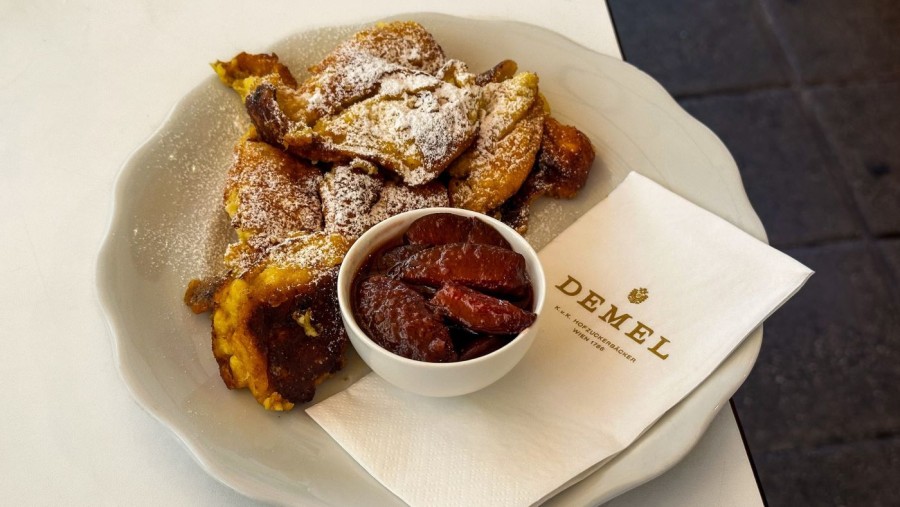
The perfect companion to coffee in Vienna is, of course, something sweet. At the top of my list was the utterly addictive Kaiserschmarrn — a golden, fluffy pancake torn into pieces, scattered with rum-soaked raisins and caramelised to perfection. Once plated, it’s dusted with icing sugar and served with a warm plum compote laced with rum, and whipped cream on the side for those who wish.
Founded in 1786, Café Demel (pictured above) is considered one of the city’s most renowned and respected temples of Viennese pastry, particularly for its Kaiserschmarrn. Equally delicious is its rich Apfelstrudel (apple strudel), delicately veiled in icing sugar and served with a warm vanilla sauce.
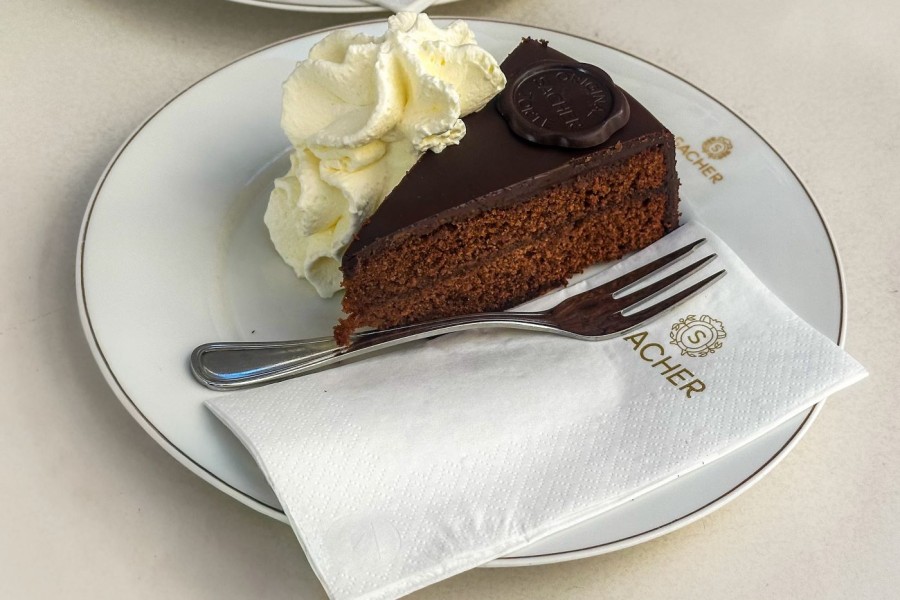
At Café Sacher, with the Vienna State Opera as a backdrop, I tried the city’s most iconic dessert — the Sachertorte (pictured below): a dense, luxurious chocolate cake with a thin layer of apricot jam inside and a glossy chocolate glaze on top, traditionally served with unsweetened whipped cream. Though I’m a chocolate devotee, I was ultimately won over by the airy Malakofftorte, layered with ladyfingers, whipped cream, and almonds.
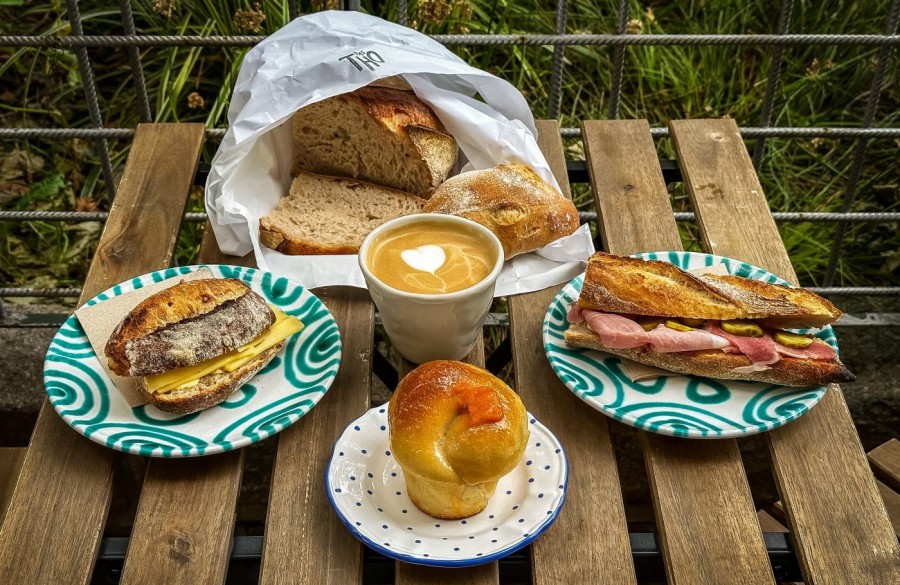
Equally distinctive is the Reingerl, with its rich, buttery flavour and a faint, delicate crispness to its crust. Traditionally made with honey (Honigreingerl), it also appears in seasonal variations — such as the apricot version, which adds freshness and subtle, sweet notes.
I tasted it at DasTHO Bäckerei (pictured below), run by Paul Thomann and Marie Weindlmayr — a new-generation bakery that focuses on pure, organic ingredients. Its homely hospitality and the quality of its bakes quickly made it one of my personal favourites. Beyond the Reingerl, I enjoyed an excellent baguette with ham and pickles, as well as a sandwich with butter and mild yellow cheese that shone in its simplicity.
At Joseph Brot, I delighted in the soft, buttery Kipferl — which translates to “crescent” and is, in fact, the ancestor of the croissant — while at Bäckerei Öfferl, their remarkable honey bread was a true highlight. Both bakeries specialise in organic products and have several locations across Vienna, some of which also offer à la carte menus featuring egg dishes, sandwiches, and sweet options such as French toast and puddings.
At PARÉMI, the French-style boulangerie–pâtisserie, the butter croissant was superb, as was the pain aux raisins, with its beautifully crisp pastry, delicate layer of crème pâtissière, and plump raisins. On the counter label it’s listed as escargot, named after its spiral shape reminiscent of a snail shell.
Tracing its roots back over five centuries, Bäckerei Arthur Grimm is Vienna’s oldest bakery — celebrated for its traditional pastries and its wide selection of gluten-free breads and sweets.
Decidedly indulgent yet utterly enjoyable are Vienna’s famous Wiener Würstelstände — sausage stands that, as of November 2024, were added to Austria’s National Inventory of Intangible Cultural Heritage. These iconic kiosks, serving generous, sizzling sausages, are scattered across the city — along pedestrian streets and squares, on street corners, and even in the parks that line the Danube. They are social hubs where locals and visitors of every age and background gather, often late into the night.
The city’s oldest sausage stand, Würstelstand LEO, still serves an impressive variety of hot dogs, while Zum Scharfen Rene caters to true fans of fiery flavours. The standout here is the Burenwurst scharf — a hearty, spiced sausage with a smoky, peppery kick.
At Alles Wurscht, run by chef Sebastian Neuschler, the concept takes on a modern twist: a new-generation stand featuring homemade products, many of them fermented. I loved the Currywurst, rich in umami, served with curry ketchup and koji curry powder, as well as the truffle fries. This particular stand even offers items rarely seen elsewhere, such as fried calamari and steak tartare.
At Wiener Würstelstand (pictured in the article’s header), organic quality is front and centre — and it shows in the exceptional flavour of its sausages. I tried the Bosna, a long roll filled with two slender sausages, mustard, onion and curry powder, and the popular Käsekrainer, where finely minced meat is combined with small cubes of cheese that melt on the grill, adding richness and depth. The grilled corn with spicy sauce is also well worth trying.
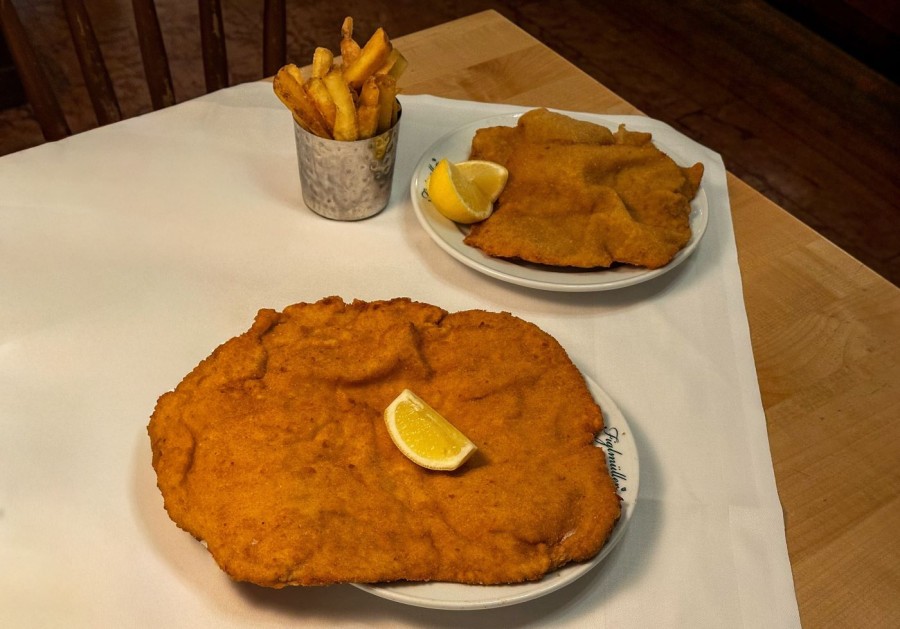
One of Vienna’s most internationally recognised culinary creations is, of course, the schnitzel. Following the advice of several locals, I visited the family-run Figlmüller (pictured above) in the city’s historic centre, which first opened its doors in 1905. Comprising a series of rooms with modern décor accented by traditional touches, wooden tables and leather banquettes, Figlmüller has an unpretentious, almost homely atmosphere. Both the classic Wiener Schnitzel, made with veal, and the Figlmüller Schnitzel, made with pork, arrived perfectly golden and delicious — tender inside, with a delicately crisp crust born of expert frying technique.
As the only capital city in the world with vineyards within its city limits, Vienna also boasts a vibrant wine culture. A number of excellent wine bars invite visitors to learn about and taste local varieties such as Grüner Veltliner, Riesling, and the distinctive Wiener Gemischter Satz — a field blend white wine with earthy character and delicate, fruity notes.
Among the city’s most elegant wine bars is Heunisch & Erben, whose extensive wine list makes it a true “school” for discovering the breadth of Viennese — and international — wines. Another fine choice for unwinding over a glass is Wein & Co, located in the heart of the city and offering an impressive selection by the glass, including a strong range of natural wines.
Photos by Anna Tasioula


Login or register to join the conversation