


To understand what Yquem truly represents, one must first understand Sauternes itself. The wine produced at this historic estate is born of a precise and recurring natural rhythm: morning humidity followed by afternoon sunshine, conditions that allow Botrytis cinerea to perform its quiet alchemy, transforming the grapes into something extraordinary.
This fungus, known as noble rot, fundamentally alters the grape berry, concentrating its juice while refining its sweetness and structure with remarkable elegance. Rather than overwhelming the fruit, botrytis reshapes it, creating a wine of depth, tension and longevity that has no true equivalent elsewhere in the world.
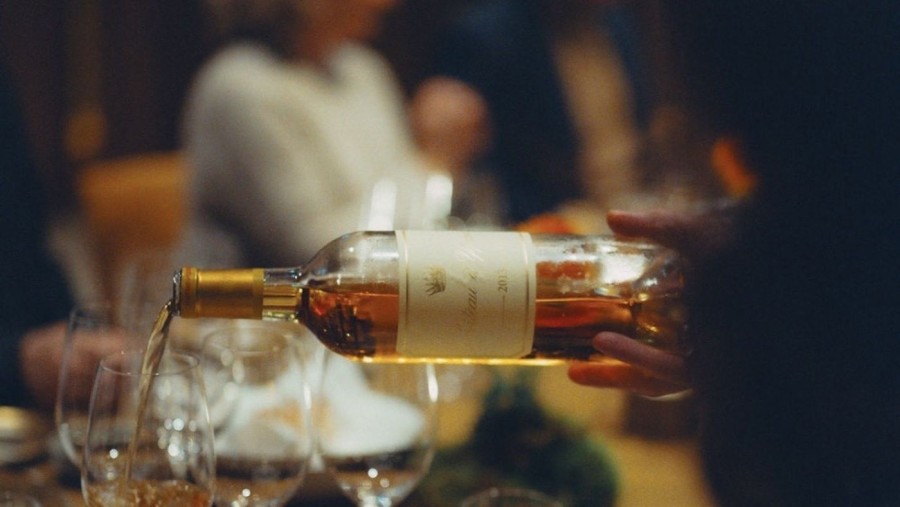
Château d’Yquem stands at the heart of this singular process like an ecosystem built on devotion. Harvest here feels closer to a ritual than to agricultural labour. It unfolds in successive passes, day after day. Teams walk the vineyard rows again and again, observing, selecting, retaining only those grapes that have reached the precise moment of perfection. We all know Yquem as a “great” Sauternes, yet it is far more than that. It is an estate that has spent generations demonstrating, in practice, what it means to allow nature to lead, and for human intervention to exist only insofar as it preserves the integrity of that fragile chain. At the estate, one phrase is often repeated, and it encapsulates the ethos perfectly: each vintage is an exercise in patience. And it shows in the glass. Yquem wines possess the rare ability to balance two seemingly opposing demands of the palate without ever becoming tiring. On one hand, depth and richness; on the other, clarity and tension. This equilibrium is precisely why the great vintages of Yquem age with such extraordinary grace. In the end, nothing that achieves such universal stature does so by chance.
I travelled to Sauternes to experience something genuinely singular: a multi-layered dinner presented as part of the Résidences d’Yquem, titled MÉTAMORPHOSES by Mauro Colagreco. On these occasions, the château entrusts its spaces to a leading chef with a distinct personal language, inviting him to create an experience in which food enters into a profound dialogue with wine. Colagreco achieved this with complete authority. His cuisine is rooted yet luminous, guided by seasonality, depth and formidable precision. There is also something else that defines his work: a rare ability to preserve the core of each idea, even in its most complex expression.
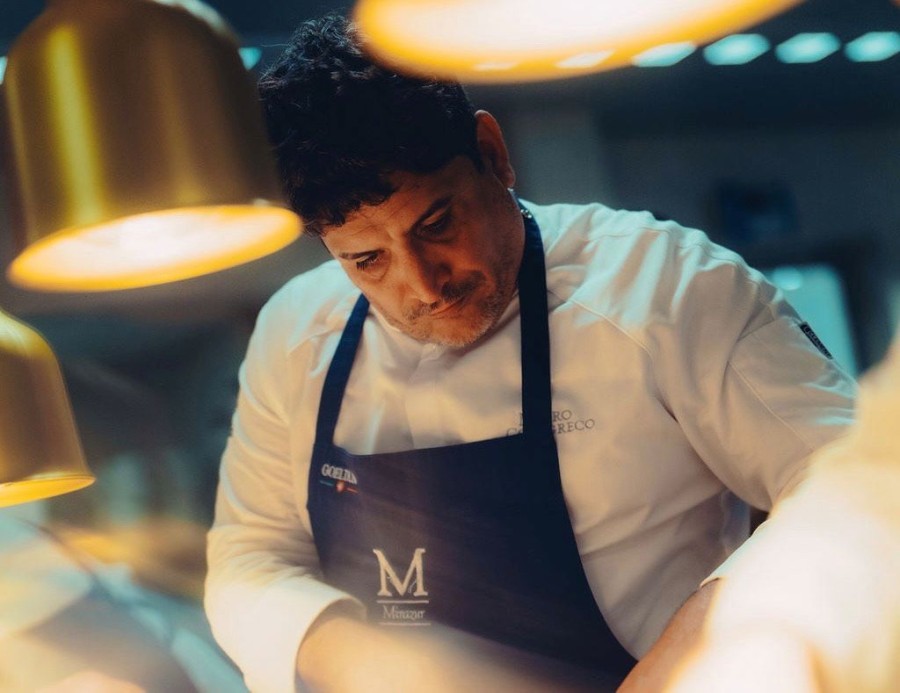
The title of the dinner, MÉTAMORPHOSES, carried symbolic weight from the very beginning. It functioned almost as a key word, one that decoded the spirit of Yquem itself: its profound relationship with time, with transformation, with the idea that nothing remains static when it is allowed to evolve properly. If I had to distil the experience of that evening into a single word, I would not choose the name of a particular vintage, nor even that of a dish, exceptional as some of them undeniably were. I would choose the word that gave the event its title: Metamorphoses. A timeless Greek word, charged with depth and memory. I would even dare to call it sacred. It is a word that carries transformation as a natural progression, and it could not be more fitting for the way Yquem moves through the centuries, just as it mirrors the way Mauro Colagreco’s cuisine at Mirazur subtly shifts the very way one understands flavour.
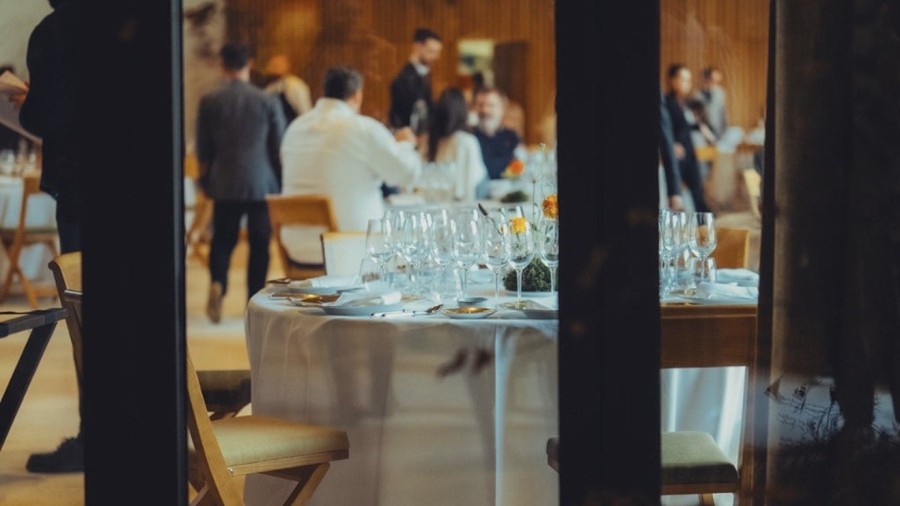
For a few hours, the château itself became a living organism of change, with three distinct spaces transforming into successive stations of experience. Each room carried its own temperature, its own light, its own silence. And with each shift in setting, the way one perceived both flavour and wine subtly evolved. Every transition served a clear, functional purpose, and that was precisely what made it so compelling. Mauro Colagreco’s decision to “translate” the world of Château d’Yquem into a dining experience felt almost inevitable. Beneath the long shadow of this iconic estate, he constructed a three-act journey shaped by the core wisdom of his cooking: never adding more than what is truly necessary.
The first act unfolded where Yquem is still being written: in the cellars, among the barrels, where the new vintage slowly builds its body and complexity. It was there, in that hushed, elemental setting, that Château d’Yquem 2022 revealed itself. A wine of remarkable density and creaminess, marked by pear, citrus and apricot, layered with floral and honeyed nuances, and finishing with that saline, gently bitter note that makes it all the more compelling. Alongside it came three exquisite opening bites by Mauro Colagreco, small in scale yet masterful in execution, setting the tone for what was to follow.
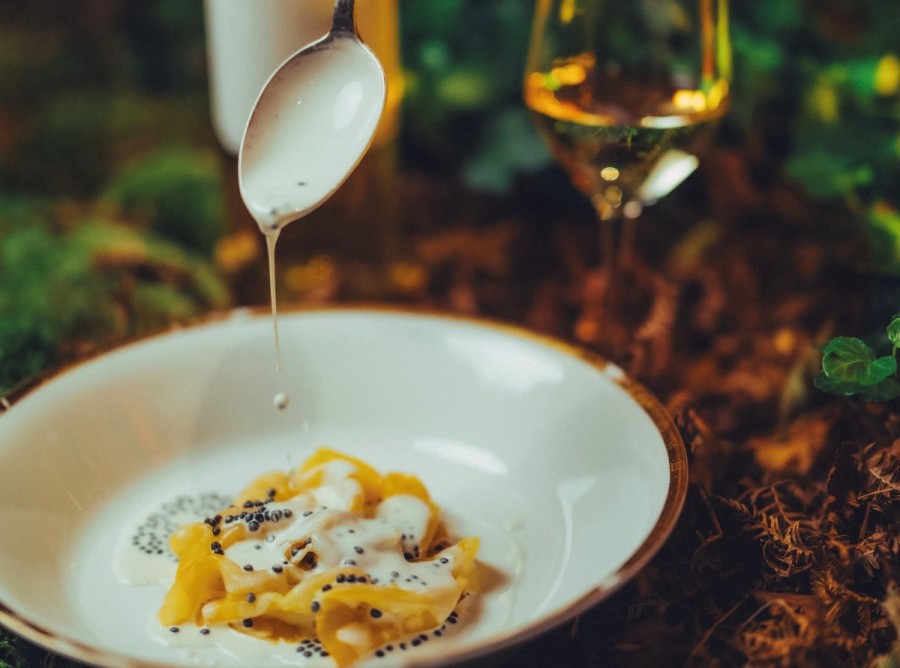
The second act led us out of the cool intimacy of the cellars and into a formal dining room, where the evening opened into its full narrative. At the table appeared some of the most emblematic ideas from Mirazur, discreetly embroidered onto the aromatic vocabulary of Yquem. Sea urchin with clementine and bottarga found its ideal counterpart in Château d’Yquem 2013, a wine shaped by exotic fruit, honey and vanilla, underpinned by vibrant acidity that illuminated the urchin’s iodised salinity and the bittersweet lift of citrus. Y 2017, the estate’s dry white wine, stood alongside the “golden” beetroot baked in a botrytis crust with caviar sauce. Creamy and silky in texture, it offered mineral energy, gentle spice and a discreetly bitter finish that brought precision to every mouthful. Corn textures with white truffle from Alba reached their apex with Château d’Yquem 1985. Notes of candied citrus and saffron unfolded with remarkable finesse, allowing the truffle to express itself fully while delivering an almost silken purity on the finish. Lobster with pumpkin and turmeric gained depth next to Château d’Yquem 2005, a harmonious and complex wine marked by fresh fruit, quince and spice, saffron and nutmeg, and that unmistakable saline finish that bound seamlessly with the pumpkin’s sweetness and the warm earthiness of turmeric. Finally, roast guinea fowl with carrot proved deeply satisfying alongside Château d’Yquem 1995, whose aromas of apricot, mandarin and beeswax gave way on the palate to a balance of intensity and gentle bitterness, countering the honeyed core and extending into a long, spicy finish.
The third act, the evening’s grand finale, unfolded in the historic salons of Château d’Yquem. In these rooms, the setting itself serves as a reminder that the château is not defined solely by its vineyards and cellars, but equally by its memory. As dessert was served, Château d’Yquem 1935 appeared, and in that moment the evening acquired a different weight, almost existential in nature. The 1935 was a lesson in what time can become when it is allowed to act with generosity. Its sweetness had evolved into something altogether different, as though it had passed through successive stages of refinement to reach a state of quiet equilibrium. Mandarin and apricot aromas emerged, joined by saffron, beeswax and mature honey. What proved most arresting was not its rarity, but the unmistakable sense that this wine had not survived by chance. It endured through intention and method. Through decisions made in the vineyard, precision exercised in the cellar, and an overarching philosophy that treats time as an ally. Each sip carried depth without heaviness, and length without fatigue. It was the kind of wine that does not impress loudly, but instead leaves a lasting imprint, reminding you that true greatness is rarely accidental.
In the historic salons of Château d’Yquem, the 1935 vintage felt like the closing of a circle that had opened at the very start of the evening: from the new harvest resting in barrel to a wine that has travelled through decades and yet arrives in the present day disarmingly vital for its age. It was there that the title MÉTAMORPHOSES revealed its full meaning, encapsulating not only the spirit of the dinner but the philosophy of Yquem itself, a house that invests in longevity and is crowned only through discipline. Each bottle carries within it an era, a point of view, a gesture repeated with unwavering consistency over generations. And so, at the end of the experience, we left filled with something that resists easy explanation. Because Yquem does not simply wait patiently for time to pass. It contains time within it. And that, ultimately, is what transforms you.


Login or register to join the conversation