


The story of their origin dates back to the Second World War, when Nathan Clark, an Irish-born officer serving with the Eighth British Army, first noticed them on the feet of fellow officers — ankle-high boots with thick crepe rubber soles, simple yet durable. Curious, he learned that the officers had commissioned them from local cobblers in Cairo, after their standard-issue military boots had proved too heavy and uncomfortable for the climate.
The first thing Clark did was to order a pair for himself. After the war, he persuaded his father to adapt the design for production at Clarks, the family’s footwear company. In 1949, the new model was officially presented at the Chicago Shoe Fair — under the name Desert Boot.
It is also said that their roots stretch back to India, where British soldiers wore a similar style — the Jodhpur boot — when playing polo in their leisure time.
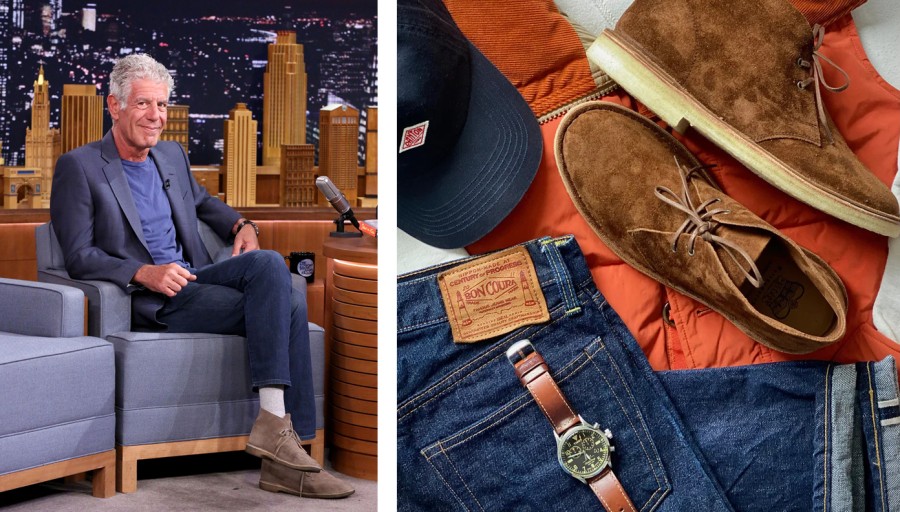
From the Desert to the Streets of London and New York
The decision proved to be a major commercial success for Clarks, which went on to become inseparably linked with the design. Even today, the Desert Boot remains a cornerstone of the company’s production. As so often happens, following its debut in Chicago, it was soon adopted by the two emerging countercultures of the time — the British Mods and the American Beatniks — both of whom played a decisive role in its rise to fame.
It’s no coincidence that in our current era of mass production, fast fashion and fleeting trends, the Desert Boot — with hardly any aesthetic alterations since its creation — continues to feature in collections from luxury houses such as Loro Piana and Louis Vuitton. Its clean, understated silhouette has made a strong comeback, firmly establishing it among the enduring classics of men’s wardrobes, with proven longevity and a loyal following.
Within the framework of British style, it stands as one of the most iconic and instantly recognisable designs — one that still feels perfectly relevant on the streets of London and beyond. Practical and easy to wear, with a small number of eyelets, soft and supple suede, and a comfortable, flexible crepe sole, the Desert Boot isn’t, strictly speaking, a boot at all. Reaching just to the ankle, it is, quite literally, the definition of smart-casual footwear — a shoe for all-day wear that effortlessly bridges multiple dress codes.
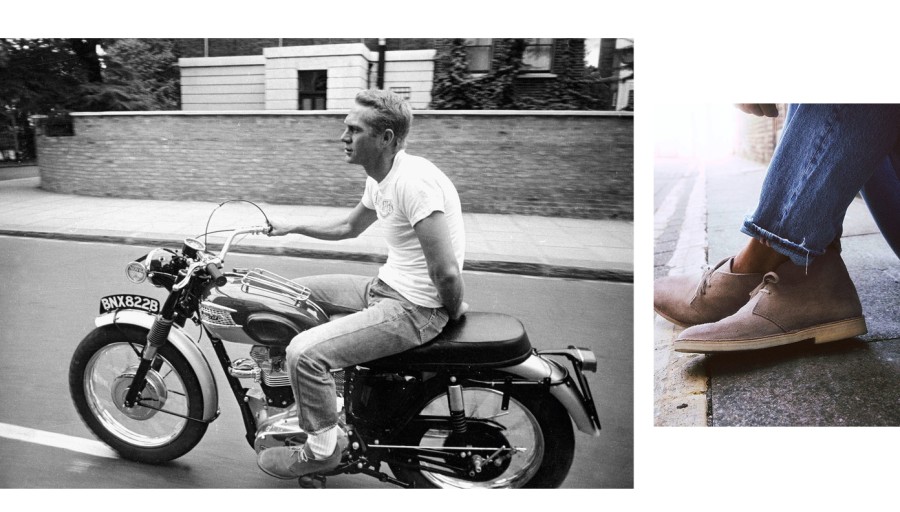
Many contemporary brands have embraced the Desert Boot, incorporating it into their collections with only minimal changes — from Todd Snyder, Drake’s and Anglo-Italian to Brioni, Loro Piana and Paul Smith. The Desert Boot remains popular for its timeless versatility and understated style, moving effortlessly from casual to smart-casual dressing. Its easy slip-on comfort and graceful ageing (though suede does demand a bit of care) also contribute to its enduring appeal.
Its lightweight construction is what truly sets it apart from its close relative, the Chukka Boot, which tends to be sturdier and more robust, yet often less refined than its desert-born counterpart.
If you’re thinking of investing in a pair, I’d suggest resisting the more “fashion-forward” versions from the likes of Gucci or Louis Vuitton. Some things, as this column firmly believes, should remain true to their original character. Instead, look to the more classic interpretations from Clarks, Drake’s, Todd Snyder, Paul Smith or Brunello Cucinelli — makers who understand that simplicity, when done right, never goes out of style.


Login or register to join the conversation