


Declining Sales in Luxury Houses
There are, of course, many other reasons behind the downturn in sales, one of the most striking being the unchecked rise in prices — even among long-established heritage brands. Take Burberry, for instance, which sought to reposition itself towards a more rarefied clientele, only to face disastrous financial results. It was no surprise, then, when a year ago representatives of the brand publicly admitted: “Burberry is returning to its traditional values and to the products that people have always loved” — a clear nod to its iconic trench coats, the very emblem of its legacy.
Even so, luxury giants such as Louis Vuitton and Chanel, both under the LVMH umbrella, have also reported significant drops in sales. The sharpest decline over the past two years, however, has been recorded at Gucci, the flagship of the Kering group. And yet, in an unexpected twist, luxury houses in Greece have actually seen sales rise — within the scale appropriate to the market, of course — fuelled largely by the extraordinary tourism boom that Athens and the islands have enjoyed in recent years.
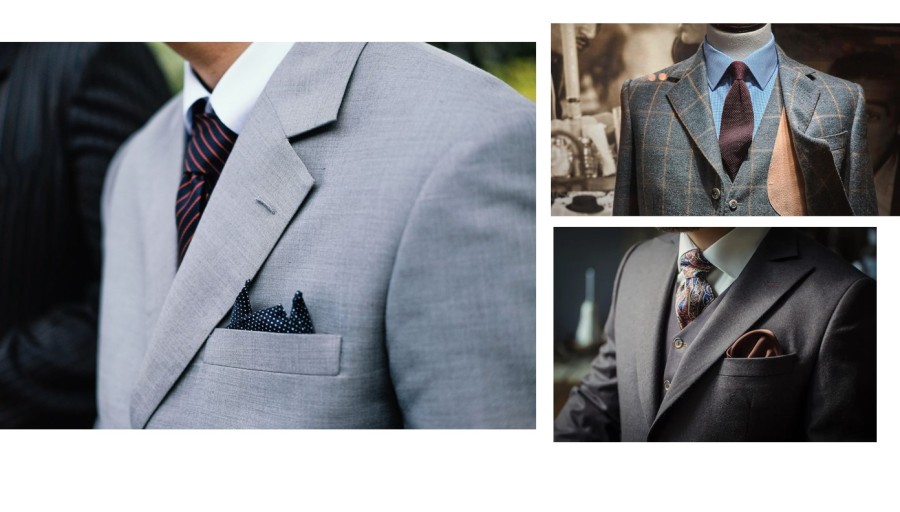
The Astronomical Price of Bespoke Suits
And yet, within certain menswear houses — or more precisely, their bespoke ateliers — there exists a rarefied category of handcrafted tailoring at truly astronomical prices that, against all odds, continues to endure. A Loro Piana, Kiton, Brioni or Zegna suit commanding €7,000, €8,000 or even €10,000 no longer raises eyebrows. But in certain cases, costs climb far higher: €20,000, €90,000, and in a handful of exceptional commissions, several hundred thousand — the price of a spacious flat in a prime Athens neighbourhood.
Consider the House of Bijan in Beverly Hills, whose clientele includes Hollywood’s elite alongside prominent politicians and business magnates. Every fabric is sourced from Italy, and the boutiques themselves are often flanked by some of the world’s most expensive cars. Here, a made-to-measure suit can reach €25,000.
Across the Atlantic, celebrated British tailor Louis Copeland, working out of Desmond Merrion Bespoke Tailor, treats tailoring as an art form. Collaborating closely with his select clientele on Supreme Bespoke pieces, he insists that true luxury must embody timelessness and exceptional durability. In his atelier, certain commissions approach €35,000.
And then there is Alexander Amosu, the British-Nigerian designer whose work has redefined the limits of extravagance. At just fifty, he has unveiled bespoke suits carrying price tags of over €100,000 — garments that blur the line between clothing and collectible art.
At Kiton, each suit in the exclusive K-50 line typically bears the signature of one of the house’s master tailors. Only fifty pieces are produced each year, with each requiring dozens of hours of meticulous handcrafting. Fabrics such as baby cashmere blended with silk, or the exceptionally rare vicuña wool, paired with tailoring that borders on perfection, drive prices to around €45,000. Even at times of high demand, Kiton strictly limits the number of bespoke commissions across its collections.
Meanwhile, Dormeuil, founded in Paris in 1842 by Jules Dormeuil, offers over 2,500 fabric choices. Every bespoke order is entrusted from start to finish to a single, highly specialised tailor dedicated to the client. Dormeuil blends its family heritage with modern innovation and often collaborates with major fashion houses. A suit made from its legendary Vanquish II cloth—woven from vicuña, qiviut, silk, and cashmere—commands, and often surpasses, €90,000.
Brioni, too, has dabbled in this echelon of luxury tailoring. In 2008, the Roman house unveiled a series of hand-made suits crafted from Dormeuil fabrics, priced at €40,000 each. Only one hundred were ever produced, making them an instant collector’s item.
Representatives of Goldstriker International, a company specialising in ultra-luxury goods, recently announced its closure following the death of its founder, Stuart Hughes. The house had become renowned for its extravagant portfolio—most famously mobile phones encrusted with precious stones, often priced well above €30,000.
A few years ago, Hughes also unveiled the R. Jewels Diamond Edition suit, crafted from cashmere and silk and embellished with diamonds. Each suit required 600 hours of work, with only three ever made, and carried a price tag exceeding €650,000.
Yet the brand’s identity was so intrinsically bound to its creator that, after his passing, the company could not sustain itself.
Interestingly, the Dubai branch of a major international auction house has noted that both a bespoke Kiton K-50 suit and a Dormeuil Vanquish II suit have previously sold for around €900,000 each. While the source is credible, such figures remain difficult to independently verify.
There are countless such examples, and what is truly striking is that, even in a period of global economic downturn, there remains steady demand—largely from wealthy Russians or Middle Eastern entrepreneurs—for suits crafted from the most luxurious fabrics. In some cases, these garments are embellished with precious stones, threads of gold or platinum, and other extravagances designed to capture the attention of this particular clientele, who are able—and often willing—to spend lavishly, sometimes purely for the sake of spectacle. For, as history reminds us, true elegance has never been synonymous with excess.

Login or register to join the conversation