




Collecting, by its very nature, is rarely confined to clearly defined categories. It tends to expand into adjacent territories, guided as much by curiosity as by intent. It is not uncommon, for instance, for a dedicated collector to set out on a focused search for a specific vintage watch, only to return with a set of Yves Saint Laurent ties from the 1970s, decorated with bold geometric motifs. Others may spend hours tracking down an authentic Burberry trench coat, and end the day delighted by the discovery of an 18th-century Japanese ceramic teapot, fully aware that they may never actually use it.
Over the course of its long history, Patek Philippe has produced far more than timepieces alone. Its legacy includes a remarkable array of objects of desire that continue to excite collectors when they surface in Parisian and Brussels antiques shops, in Switzerland, or at international auctions. Among them are wall clocks and desk clocks adorned with rare decorative craftsmanship, pieces featuring cloisonné enamel, miniature painting and marquetry, as well as marine chronometers, cufflinks and, naturally, lighters.
These objects occupy a space where precision, artistry and desire intersect, appealing to collectors who understand that true connoisseurship is often defined not by utility, but by the quiet thrill of discovery.
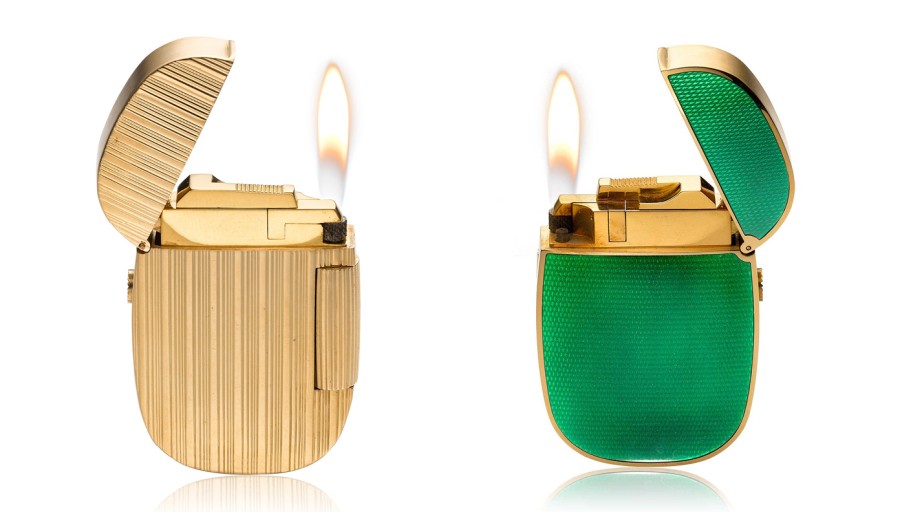
Golden Ellipse collectible lighters
These are rare and highly sought-after accessories, produced in very limited numbers, estimated at between 200 and 400 pieces, from the late 1970s to the early 1980s. They were never offered for retail sale. Instead, they were acquired through special orders or presented as accompanying accessories with the purchase of a watch, a fact that only adds to their desirability today.
That period was a particularly turbulent one for luxury goods, for smoking culture and, above all, for Swiss watchmaking. The Swiss industry was confronting the upheaval of the quartz revolution, while broader social and aesthetic values were also shifting in ways that would previously have seemed unthinkable to the traditional elite. In response, Patek Philippe, seeking to broaden its presence through new product categories, introduced a range of refined accessories. These included cufflinks, tie clips, rings, key fobs and, notably, lighters. As the rise of quartz watches led to a contraction in the production of traditional high horology, the Swiss maison turned to the finest artisans of the era, craftsmen capable of creating accessory-objects that functioned as jewellery, combining aesthetic sophistication with genuine artistic value.
Jewellers were enlisted alongside specialists in enamel painting and master engravers, resulting in pieces that reflected the same standards of precision, craftsmanship and restraint that defined the brand’s watches.
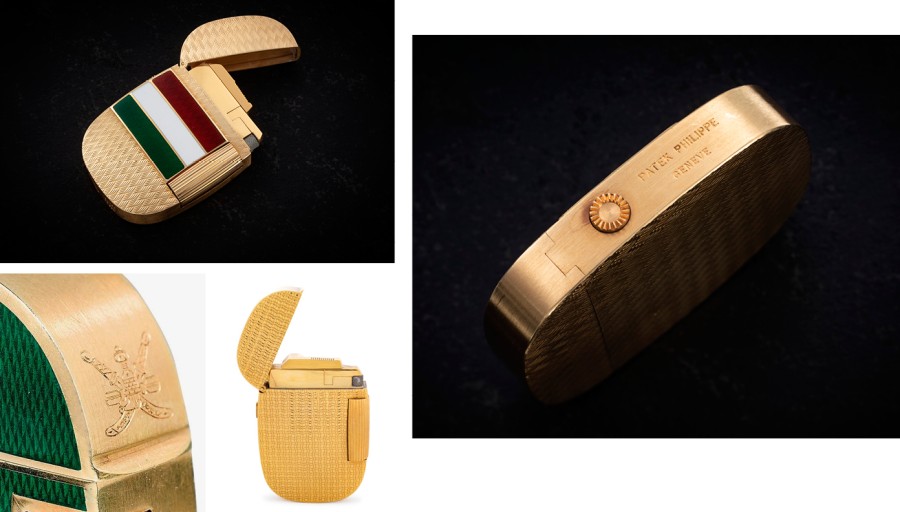
The Golden Ellipse, an oval-shaped lighter crafted in various grades of gold, proved to be the ideal canvas for the highly specialised artist-craftsmen who worked on its surface. While experts have occasionally noted that its mechanical performance was not flawless, the aesthetic virtues of the lighters presented during that period by Patek Philippe are so compelling that they have secured them a place at the very top of collectors’ wish lists, particularly among devotees of the maison.
Some 45 years after their introduction, these lighters are now regarded as the ultimate vintage luxury accessories. A surviving promotional leaflet from 1978 notes that the company accepted commissions for lighters featuring hand engraving or enamel decoration, tailored to the client’s personal preferences. One such commission came from Qaboos bin Said, who ordered a series of Golden Ellipse lighters as diplomatic gifts. These pieces were decorated with the Khanjar, the emblem of the Sultanate of Oman, rendered on their surface with exquisite craftsmanship. At auction, examples from the Golden Ellipse series typically achieve prices in the region of €30,000 to €45,000, with the most coveted versions being those enamel-decorated pieces commissioned by the Sultan. These lighters stand today not merely as accessories, but as objects where horology, jewellery and cultural history converge.




Login or register to join the conversation