




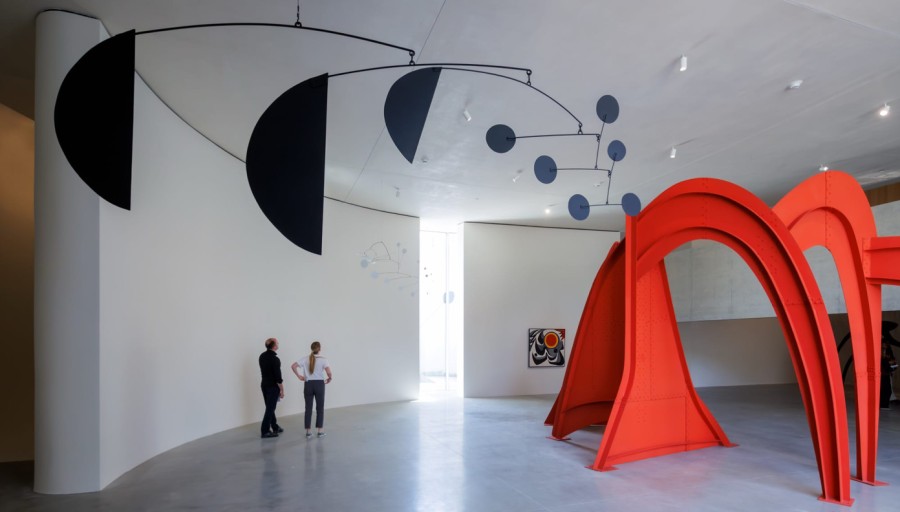
In 1926, Alexander Calder moved to Paris, where he created the iconic Cirque Calder, a complex, portable miniature circus made of wire, fabric and wood, which he presented privately to friends. It comprised around 100 individual figures, including acrobats, animal tamers and animals, all animated by the artist himself in improvised performances.
After 1930, influenced by the work of Piet Mondrian, he began to introduce movement into his wire constructions, creating his first mobiles, a term coined by Marcel Duchamp. These striking suspended sculptures captivated contemporary audiences, as even the slightest movement of air generated ever-changing compositions. At the same time, Calder produced monumental static outdoor sculptures in metal, as well as jewellery, stage sets for theatrical productions and lithographs.
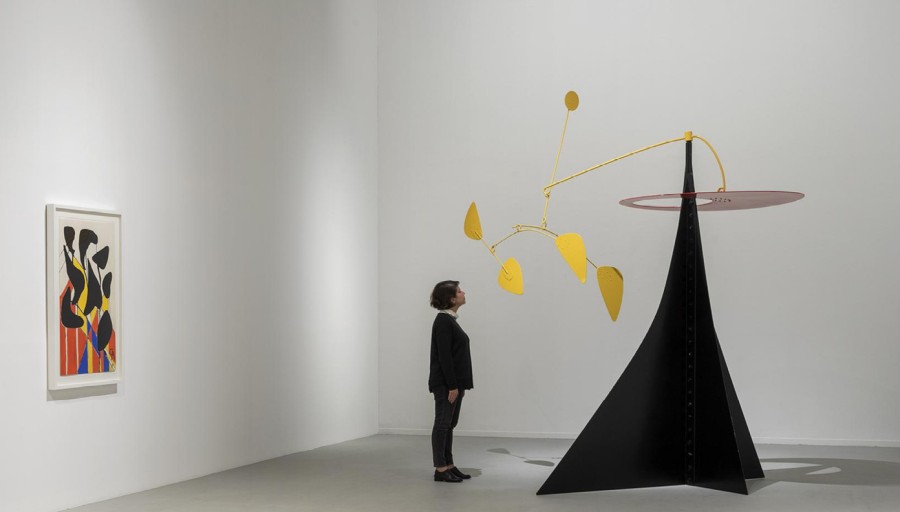
Calder’s art captivated the Parisian avant-garde and redefined public art through his monumental sculptural constructions of the 1960s and 1970s. This exhibition is among the most significant ever devoted to the work of the celebrated artist and has been conceived in collaboration with the Calder Foundation, which is providing the majority of the works on display, alongside loans from international institutions and leading collectors.
More than 300 static and kinetic sculptures have been brought together, along with wire portraits, carved wooden figures, paintings and unique items of jewellery. Spanning over 3,000 square metres, the exhibition aims to highlight the fundamental artistic concerns that shaped Calder’s practice. The presentation is further enriched by works from the collections of friends of the artist, including Jean Arp, Barbara Hepworth, Jean Hélion and Piet Mondrian, as well as Paul Klee and Pablo Picasso.
In parallel, 34 photographs by some of the most important photographers of the 20th century will be exhibited, all relating to Calder’s work. Among them are Henri Cartier-Bresson, André Kertész, Gordon Parks, Man Ray, Irving Penn and Agnès Varda.
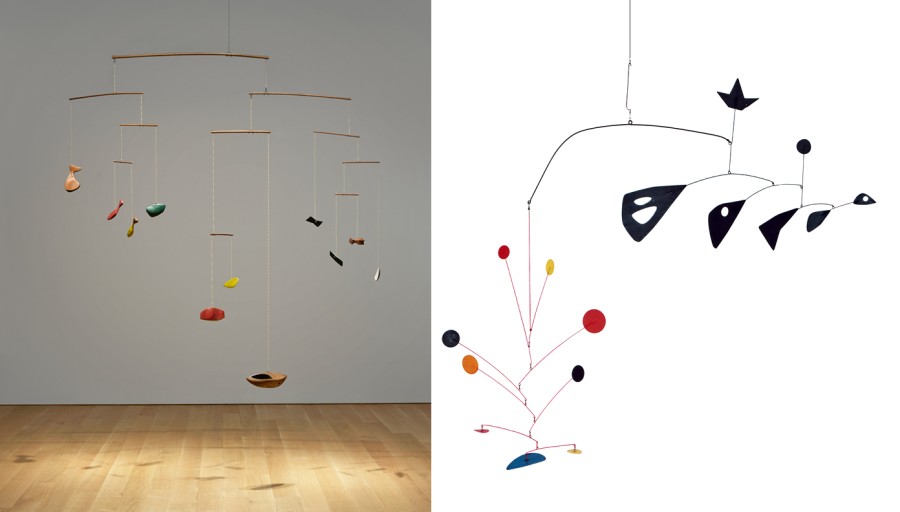
Calder’s work was shaped to a great extent by his visit to Piet Mondrian’s studio in 1930. The encounter left a profound impression on him and led him to embrace abstraction, initially through painting and subsequently through sculpture. When his first abstract kinetic figures were presented in 1932 at the Vignon Gallery in Paris, Marcel Duchamp had already suggested the term mobiles a year earlier.
At first, movement in these works was generated mechanically. Later, their delicate construction allowed them to respond to the slightest movement of air. Jean-Paul Sartre famously observed that Calder’s works “draw life from the very indefinable life of the atmosphere”. Living with one foot in America and the other in France, Calder redefined the very concept of sculpture through his practice, introducing time as an essential fourth dimension. In 1952, he was awarded the Grand Prize for Sculpture at the Venice Biennale.
One can only imagine how striking it will be to see the iconic artist’s mobiles suspended within the interior of the Fondation Louis Vuitton, designed by the renowned architect Frank Gehry. The exhibition is strongly supported by the Calder Foundation and the Whitney Museum of American Art.




Login or register to join the conversation