



As you enter the dimly lit room and are guided to your seat, nothing, absolutely nothing, can prepare you for what is about to unfold. At Gaggan, you do not simply eat. You take part in an experience that could not have been conceived by anyone else in the world.
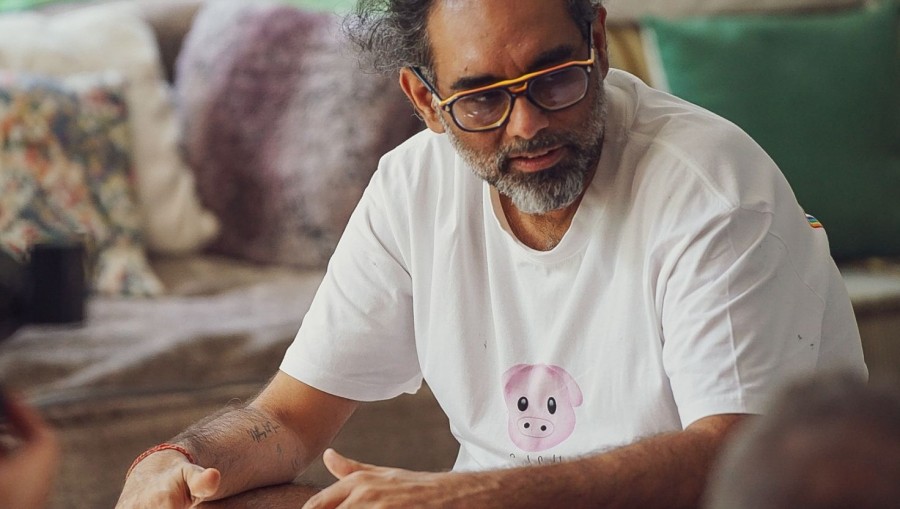
The day after the meal, Gaggan sits opposite me, with what he jokingly calls his “drummer’s hands” and two tattoos that speak volumes. One bears the iconic Nirvana smiley, the other a phoenix rising from the ashes.
“Who is your favourite drummer?” I ask.
The answer comes without a second thought.
“Dave Grohl and Taylor Hawkins. Both in the same band…”
He smiles in a way that makes it immediately clear this will not be a conventional interview.
He speaks with the same intensity about Danny Carey of Tool, Mike Portnoy of Dream Theater, and Stewart Copeland of The Police. Drummers with presence and personality, musicians who did not simply accompany the music but helped build it, note by note, alongside the rest of their bands.
“I always wanted to be a musician and I always wanted to be a chef. It was like yin and yang, constantly pulling against each other. I know very well that cooking is my career, but music is my soul.”
“I started out as a drummer, but I had an accident. I ended up underneath a bus and almost lost my leg. Thirty-five years later, I still take painkillers. Sometimes, when I play the drums at home, I lose control of my leg.”
You have said on several occasions that your restaurant is progressive, haven’t you? And yet last night we did not hear much progressive music.
“Yes, but the first track was Pink Floyd. I change the music every three months. I usually include two progressive tracks. This time I also had Tool. But did you notice? At that moment, when the track came on, only you and I connected. Everyone else was thinking, ‘what on earth is this?’ Then I put on Ice Ice Baby, just to blow it all apart.”
So how do you deal with someone who does not like loud music in the restaurant?
“Fuck off. Leave. Walk out. You can take any of those as my answer. I grew up with rock and roll. You are not going to tell me that 90 decibels is too much.”
What clearly frustrates Gaggan Anand is the passivity he encounters in fine dining restaurants.
“Most places just play music in the background. It is wrong. It is bad. Food is emotion.”
At Gaggan, the experience is built around musical composition. The playlist changes with each season, just like the menu. It begins gently and builds in intensity as the meal progresses. Music is not there to fill the space but is used as a tool of direction and pacing.
“I want music to make you feel something. When I play Pink Floyd, there has to be a reason. When I play Hey Jude by The Beatles, it has to land like a powerful moment. I want to see people’s faces change.”
The sound system at Gaggan’s restaurant reportedly cost half a million dollars and has been engineered so that wherever you are seated, the sound remains clear, immersive and concert-like. This is not an exaggeration.
When I ask him which dish he considers the most theatrical he laughs.
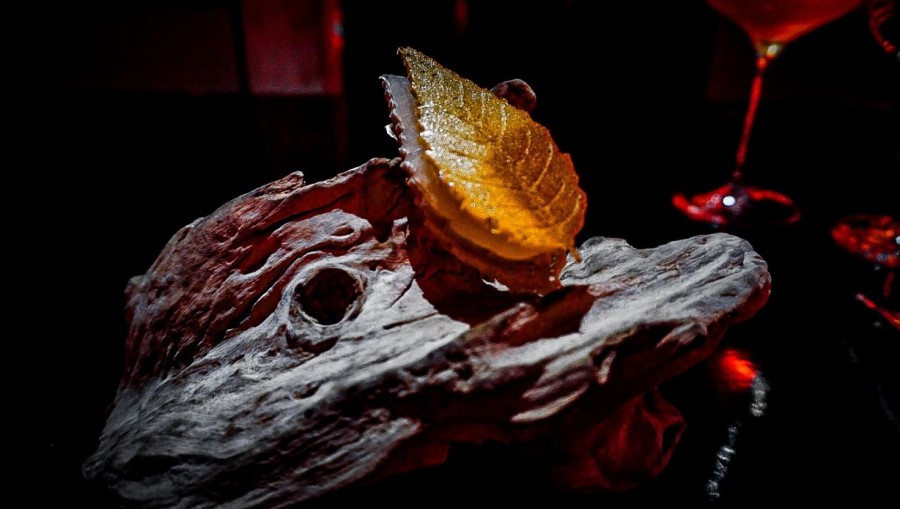
“All of them. It is not about individual dishes, but the journey. Food at Gaggan is magic, illusion, a psychological game.”
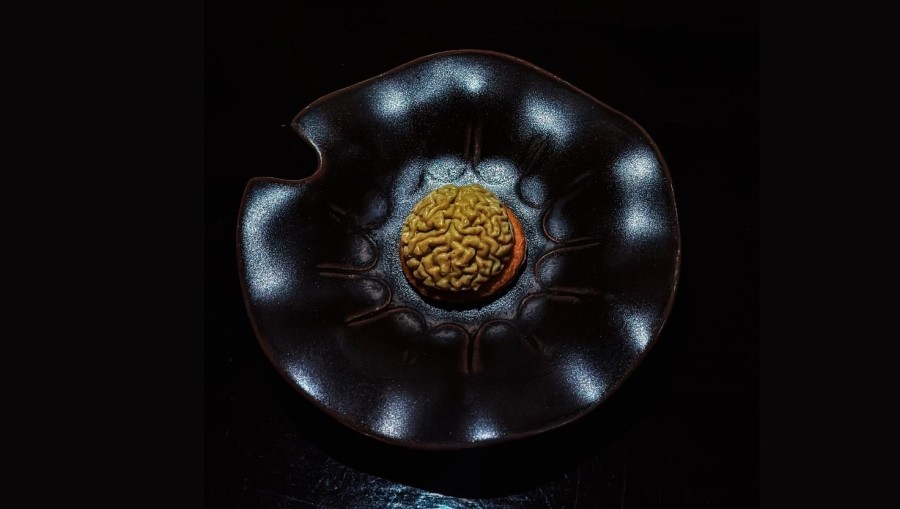
The example he offers is telling. The now-famous Brain, a dish that resembles a goat’s brain set in green curry. The flavour, however, is exactly as it should be. Layered, aromatic, comforting and almost traditional. The provocation is visual and intellectual, not gastronomic.
“I play with your limits. But flavour always comes first. Then come the interplay of texture, temperature and music.”
The conversation repeatedly returns to music. Not by chance. For Gaggan, it is not simply a source of inspiration, but the wellspring of everything he creates.
The most defining album of his life? The Dark Side of the Moon. His expression changes as soon as he mentions it. He does not simply call it a classic, but the most creative album ever made in terms of aesthetics, colour and emotion.
At one point, he even created a dish inspired by it, conceived as a protest against Brunei’s anti-LGBTQ laws.
“You throw a stone at me, I become a rainbow.”
Each colour on the plate represented a different fruit, and the dish was always presented to the sound of Time. Music, here, is not merely accompaniment. It is a story within the story.
Gaggan’s obsession reaches its peak when he talks about the Foo Fighters. He has seen them live all over the world. He was there at Madison Square Garden for their first concert after Covid. He was also in London for the tribute concert to Taylor Hawkins. Rami Jaffee, the band’s keyboardist, is now a personal friend.
And when I ask what he would cook for them backstage, the answer comes easily.
“Barbecue. The Foo Fighters love barbecue, and Dave Grohl even more.”
Somewhere amid the discussion of Pink Floyd, Nirvana and Tool, a small but deeply moving story emerges. On the day his mother was dying, knowing it would be a matter of days, he decided to get two tattoos. On one arm, the iconic Nirvana smiley. On the other, a phoenix, the bird that rises from its own ashes.
“I wanted to smile, and at the same time I knew I wanted to be reborn. But immediately afterwards I had to fly, and the ink completely faded from my skin.”
He has never had the tattoos retouched, even though they now appear faint on his arms.
Towards the end of our conversation, I ask whether the next step might be live musicians playing while food is cooked and served.
“I have already ruled that idea out. It would be too loud, and the sound would not be what I want. You see, even that possibility I think about as a musician. The sonic result would disrupt the dining experience, and that is certainly not something I want to do.”
So what should we expect next?
“In April, we close. We will make it even more theatrical, more extreme, but in a way no one expects. I am going to change everything.”
If one were to distil the Gaggan experience into a single idea, it might be this. The creator and the creation have become one. He is a musician who cooks and composes. A chef who projects his personal universe onto the plate. A performer who asks his audience to enter the mood fully. And in the end, what lingers is not a signature dish or a striking effect, but the feeling that food, in that room, is something broader than taste alone.
Gaggan is not trying to offer you a dinner. He is trying to offer a journey, one that unsettles you just enough so that when you leave the table, you feel slightly changed.
“Did you notice that elderly Thai couple at dinner last night?” he asks me.
“All evening they ate and observed, almost without reacting. But the moment Hey Jude came through the speakers, they raised their arms and sang out loud. They might not have known the lyrics. They might not even have known whether the song was saying ‘Hey Jude’ or ‘Hey June’. It did not matter. For a moment, they became children again. That is Gaggan.”




Login or register to join the conversation