



In 2011, Jon Bon Jovi and his wife, Dorothea, decided to open a modern post-industrial restaurant in the Red Bank area of New Jersey, aiming to provide local community members with access to quality comfort food, even if they cannot afford it. The entire venture was named JBJ Soul Kitchen.
The initial idea was simple yet innovative. When Soul Kitchen opened its doors, people from all social classes had the opportunity to dine in the same space, regardless of whether they could pay for their meal. Those who were able to pay often left extra money, thereby covering the financial gap, while those who couldn`t afford it could volunteer their help in the kitchen or in the restaurant`s own gardens, where fruits, herbs, and vegetables were grown. In this way, the trained staff of the restaurant could connect more closely with those in need, learning more about their lives and challenges, and helping them in ways that went far beyond just providing a meal.
“People sit together without knowing whether the person opposite them can pay for their meal. You don’t know if the person sitting next to you is in need or not, but what matters is discovering how many commonalities you share with your neighbour, sitting down to talk to them—something that might never happen under different circumstances,” says Jon Bon Jovi. In fact, in an interview he gave within the restaurant, he stated: “Hunger often doesn’t look like what you imagine. These are the people in your church, the children who go to the same school as your kids. Many come to Soul Kitchen, look around, and tell us that there are no homeless people here. I assure you that sitting here right now are five homeless individuals, but they don’t look like what you think they look like.”Any suggestion that the quality of food at the restaurant might be mediocre quickly dissipates, as the masterminds behind the project made the creation of a unique menu from seasonal and local ingredients their top priority. This menu changes every two weeks and is crafted by recognised chefs from the area, as well as by famous colleagues who take the reins of the kitchen from time to time. Even the salmon served at the restaurant is sourced from within a five-kilometre radius. They certainly did not want the charitable mission of Soul Kitchen to overshadow the final result. The suggested price for the lunch menu is twenty dollars, while dinner is approximately thirty, including a starter, a main course, and a dessert. Dishes served at Soul Kitchen include artichoke bisque, Asian Bok Choy salad, salmon with hollandaise sauce, asparagus and roasted potatoes, ratatouille, beef short rib accompanied by Brussels sprouts and mashed potatoes, and rigatoni with beef ragù, among others.
The location where the restaurant opened was chosen because Bon Jovi and his wife lived there for many years. However, the success and widespread acceptance of their initiative have expanded the project to three additional locations: in the Tom’s River area of New Jersey and on the campuses of Rutgers and New Jersey University, with plans for the first café following a similar philosophy in the works. Although the statistics may be of minor importance in this case, it is worth noting that to date, the restaurants have provided over two hundred thousand meals, with 43% of those meals having been paid for.
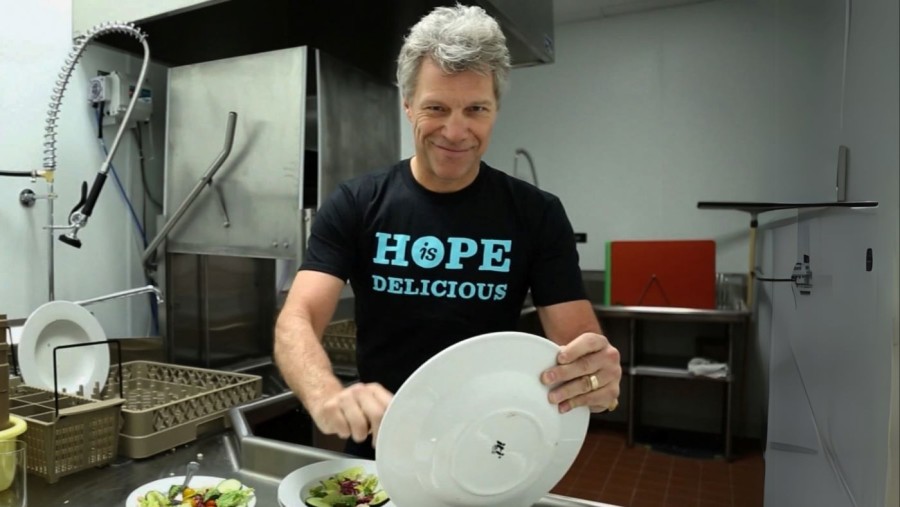
While Jon Bon Jovi`s personal net worth may exceed four hundred and ten million dollars, there are many occasions when he can be found at Soul Kitchen, washing dishes and lending a hand in the kitchen. In fact, he has written a song about this experience titled "Do What You Can," which was released in 2020.
Can what is done at Soul Kitchen truly be compared to the adoration he receives on stage? Jon Bon Jovi himself provides the answer: "Obviously, it can`t be compared to writing or performing songs. However, what Soul Kitchen does is give me the same sense of fulfilment when I leave here in the evening. That’s why I often say that the way to feel good is simply to do something good."
The initial idea was simple yet innovative. When Soul Kitchen opened its doors, people from all social classes had the opportunity to dine in the same space, regardless of whether they could pay for their meal. Those who were able to pay often left extra money, thereby covering the financial gap, while those who couldn`t afford it could volunteer their help in the kitchen or in the restaurant`s own gardens, where fruits, herbs, and vegetables were grown. In this way, the trained staff of the restaurant could connect more closely with those in need, learning more about their lives and challenges, and helping them in ways that went far beyond just providing a meal.
“People sit together without knowing whether the person opposite them can pay for their meal. You don’t know if the person sitting next to you is in need or not, but what matters is discovering how many commonalities you share with your neighbour, sitting down to talk to them—something that might never happen under different circumstances,” says Jon Bon Jovi. In fact, in an interview he gave within the restaurant, he stated: “Hunger often doesn’t look like what you imagine. These are the people in your church, the children who go to the same school as your kids. Many come to Soul Kitchen, look around, and tell us that there are no homeless people here. I assure you that sitting here right now are five homeless individuals, but they don’t look like what you think they look like.”Any suggestion that the quality of food at the restaurant might be mediocre quickly dissipates, as the masterminds behind the project made the creation of a unique menu from seasonal and local ingredients their top priority. This menu changes every two weeks and is crafted by recognised chefs from the area, as well as by famous colleagues who take the reins of the kitchen from time to time. Even the salmon served at the restaurant is sourced from within a five-kilometre radius. They certainly did not want the charitable mission of Soul Kitchen to overshadow the final result. The suggested price for the lunch menu is twenty dollars, while dinner is approximately thirty, including a starter, a main course, and a dessert. Dishes served at Soul Kitchen include artichoke bisque, Asian Bok Choy salad, salmon with hollandaise sauce, asparagus and roasted potatoes, ratatouille, beef short rib accompanied by Brussels sprouts and mashed potatoes, and rigatoni with beef ragù, among others.
The location where the restaurant opened was chosen because Bon Jovi and his wife lived there for many years. However, the success and widespread acceptance of their initiative have expanded the project to three additional locations: in the Tom’s River area of New Jersey and on the campuses of Rutgers and New Jersey University, with plans for the first café following a similar philosophy in the works. Although the statistics may be of minor importance in this case, it is worth noting that to date, the restaurants have provided over two hundred thousand meals, with 43% of those meals having been paid for.
While Jon Bon Jovi`s personal net worth may exceed four hundred and ten million dollars, there are many occasions when he can be found at Soul Kitchen, washing dishes and lending a hand in the kitchen. In fact, he has written a song about this experience titled "Do What You Can," which was released in 2020.
Can what is done at Soul Kitchen truly be compared to the adoration he receives on stage? Jon Bon Jovi himself provides the answer: "Obviously, it can`t be compared to writing or performing songs. However, what Soul Kitchen does is give me the same sense of fulfilment when I leave here in the evening. That’s why I often say that the way to feel good is simply to do something good."




Login or register to join the conversation