


Perched above Zurich and overlooking Lake Zurich from the Adlisberg hill, The Dolder Grand has stood as a benchmark of Swiss hospitality for more than 125 years. Its story begins in 1899, when entrepreneur Heinrich Hürlimann commissioned Swiss architect Jacques Gros to design the Grand Hotel & Curhaus.
At the height of the Belle Époque, Zurich was taking its first decisive steps towards international prominence, and the Dolder provided a fitting stage: a grand hotel that quickly secured its place on the European circuit of the bourgeois elite. Politicians, artists and industrialists were drawn to it, and through their presence the hotel’s reputation acquired both longevity and depth, establishing the Dolder as more than a destination, but as a symbol of the city’s cultural and social ascent.
A little more history before I come to the reason that brought me all the way to The Dolder Grand. In the mid-1970s, the hotel entered a new chapter when it was acquired by Urs E. Schwarzenbach, a Swiss entrepreneur with a deep affinity for art and a highly refined sense of timeless style. He saw the property not merely as a piece of Zurich’s heritage that deserved preservation, but as an opportunity for thoughtful reinvention. The defining moment came in the early years of the 21st century, when Schwarzenbach decided to embark on a radical transformation. For the task, he turned to Norman Foster, an architect of international standing, renowned for his rare ability to fuse old and new with surgical precision. The result is widely regarded as one of Europe’s most compelling examples of how historic legacy and contemporary architecture can coexist in perfect balance.
There is, however, something no visitor can overlook upon stepping through the doors of The Dolder Grand. Built upon this renewed architectural language, Schwarzenbach gave form to his second great passion: art. Over time, he assembled a remarkable collection of works bearing legendary signatures, curated in such a way that they are not merely displayed, but fully integrated into the hotel’s aesthetic, functioning organically within its spatial flow.
The visual identity of The Dolder Grand is shaped by a private collection of more than 100 artworks. In the lobby, along the corridors, on the way to the spa, at points where the light subtly shifts, in the restaurant, the bars and even at the entrance itself, art inhabits the space with an almost disarming naturalness. Call it indulgence if you wish, but this is how I experienced it. On my first evening, as we were making our way into The Restaurant, the hotel’s flagship dining room awarded two Michelin stars, I quite literally stopped in my tracks. In the antechamber of the restaurant, I found myself face to face with one of Salvador Dalí’s most significant works. Through this coexistence, The Dolder Grand acquires a deeper identity. Hospitality here transcends comfort and service, evolving into an immersive cultural experience, where art, architecture and gastronomy are inseparably intertwined.
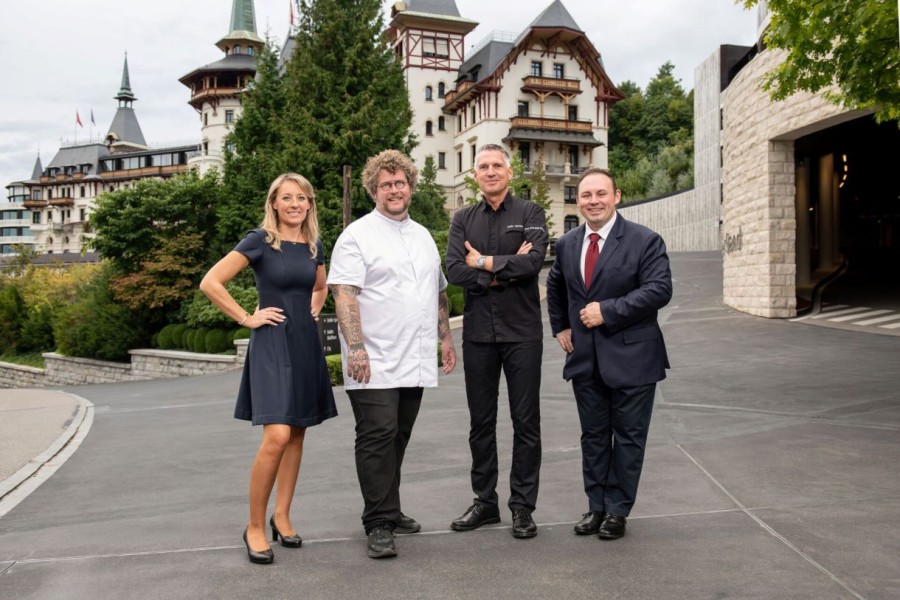
The Epicure, the culinary festival hosted by The Dolder Grand, celebrated its tenth anniversary this year. Launched in 2014 as the vision of chef Heiko Nieder, the festival has, over the course of a decade, welcomed 111 guest chefs from 30 countries, with a total of 249 Michelin stars passing through its kitchens.
I have attended many international gastronomy festivals in recent years, yet none has quite compared to The Epicure. The reason lies in its role beyond the purely culinary. Thanks to its international reach, the festival has evolved into an institutional magnet for Zurich, attracting some of the world’s most important chefs while drawing a knowledgeable, highly demanding audience that travels with clear gastronomic intent. For a few days each year, the city reinforces its position as a destination for haute cuisine. The Epicure delivers a concentrated, exceptionally high-level experience that goes far beyond a sequence of fine dinners. It functions instead as a cultural event, one that meaningfully elevates Zurich’s standing on the European gastronomic map.
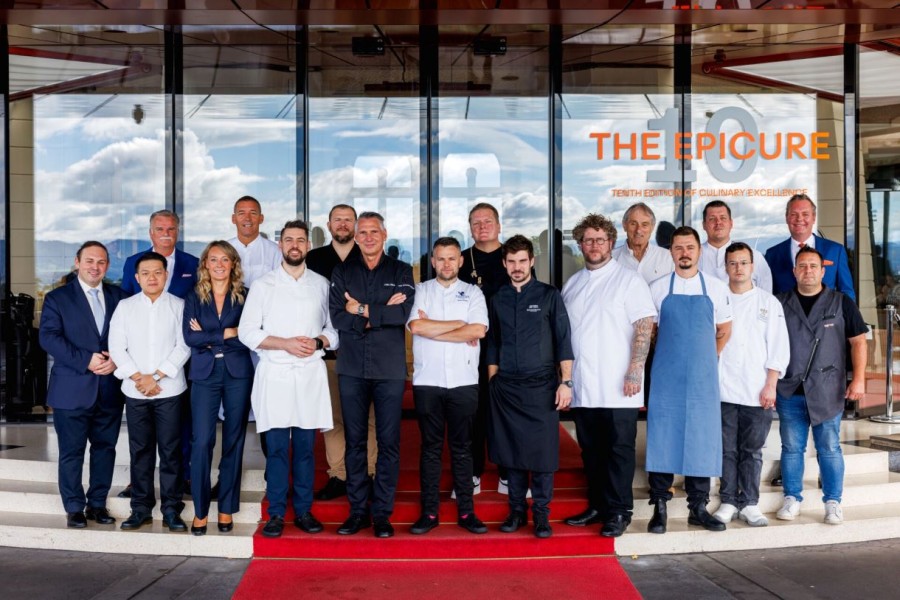
It was against this backdrop that I experienced The Epicure this year, in its landmark tenth anniversary edition. Each year, the festival brings to The Dolder Grand a line-up of chefs with genuine international gravitas, and this year was no exception. The programme was built around a series of four-hands dinners hosted by Heiko Nieder at The Restaurant, with guest chefs including César Troisgros, Tim Boury, Kirk Westaway, Kai Ho andEric Kragh Vildgaard. I found myself at the heart of three of the week’s standout moments: two four-hands dinners, one with Kai Ho and another with Eric Kragh Vildgaard, as well as a Champagne and cigar lunch titled The Art of Blending. For this special event, Heiko Nieder curated an exceptional midday experience in collaboration with Davidoff, joined by Nick Bril and Kirk Westaway.
I would like to pause on the dinner with Eric Kragh Vildgaard, chef and co-owner of the three-Michelin-star Jordnær in Copenhagen. It was here that the qualities which place him firmly at the forefront of the global culinary scene were confirmed in the clearest possible way: a cuisine defined by absolute discipline, exceptional precision and a rare sense of restraint.
We tasted many remarkable dishes that evening, yet the ethereal bluefin tuna with myoga and caviar from Kaviari stood out as a true monument to perfection, a dish where purity, balance and technique aligned seamlessly.
The following lunch was one of those rare moments that illustrate what it truly means for something to be epicurean. Heiko Nieder possesses a singular ability to bring together different energies, distinct culinary schools and contrasting gastronomic languages, and to make them speak in unison. The Champagne and Cigar Lunch with Nick Bril and Kirk Westaway embodied precisely that. Three strong creative personalities, a single coherent flow, and a sense of rare creative freedom, expressed within a framework that was at once meticulously controlled and effortlessly relaxed.
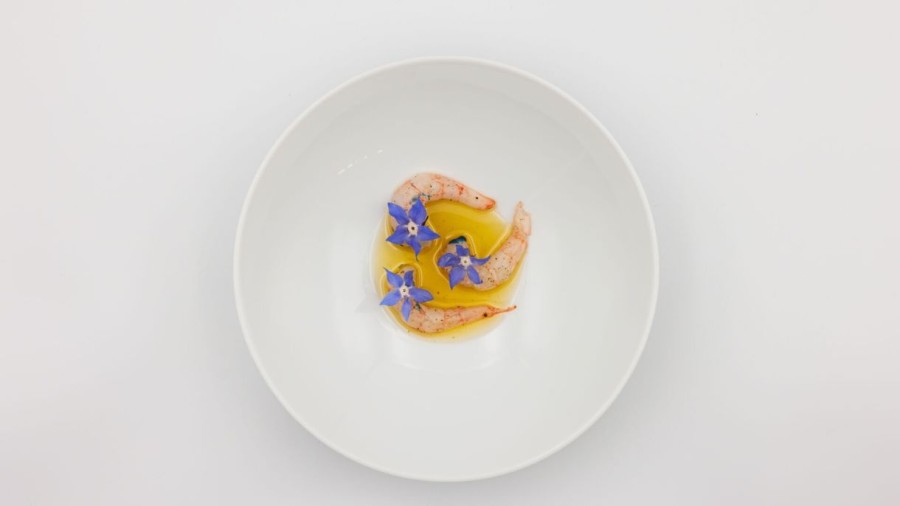
From Kirk Westaway, I was particularly taken by the chargrilled sweetbreads with pickled lemon and Kristal caviar. Smoky intensity met bright, incisive acidity, while the caviar added depth and a long, resonant finish. The same sense of restraint and balance defined his guinea fowl pithivier with onion marmalade and chanterelles: refined and precise, deeply comforting yet never heavy, with an elegance that kept the dish remarkably light on its feet. At this lunch, Nick Bril of The Jane delivered a masterclass. I will remember for a long time the langoustine with cauliflower and beurre noisette, and his wild sea bass with nori and lemon verbena shone with clarity, freshness and exacting control. At the same time, Davidoff created a beautifully considered setting around the cigar ritual itself. Master rollers crafted cigars on the spot, specifically for the lunch and the festival, elevating the occasion into a fully epicurean experience, where gastronomy, craftsmanship and ceremony converged effortlessly.
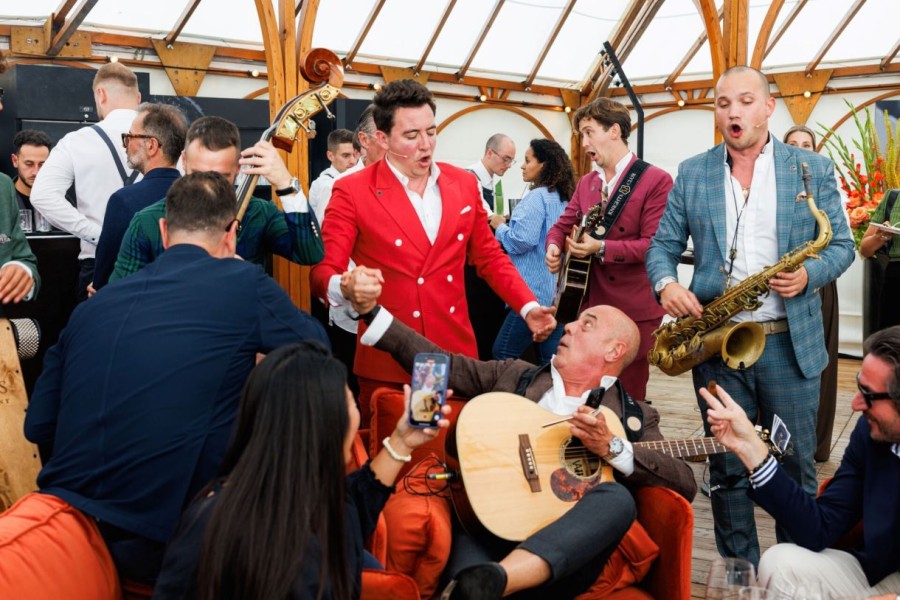
THE FINAL marked the moment when The Epicure briefly stepped away from the formal rituals of fine dining and opened itself to something more vibrant, playful, relaxed and collective. An all-day celebration that unfolded like a culinary promenade, it occupied two floors filled with cooking stands, each manned by a leading chef serving one of their signature dishes.
Among them were Heiko Nieder, César Troisgros, Tim Boury, Kirk Westaway, Kai Ho and Eric Kragh Vildgaard, alongside Christoph Rainer, David Žefran, Alain Weissgerber, Eero Vottonen, Pascal Steffen, Massimiliano Delle Vedove and Lewis Wilson.
Wine and Champagne flowed freely, to the point where more than 100 bottles of Dom Pérignon were eventually emptied. Outdoors, two of Europe’s most celebrated cocktail bars, Sips and De Vie Bar, kept spirits high, serving drinks throughout a high-end party atmosphere that felt alive and electric. Music, cigars, desserts, ice creams and coffee completed the picture, as around 700 guests came together for a festival that genuinely felt without precedent, a fitting finale to a week where gastronomy was celebrated not just as craft, but as shared experience.

Login or register to join the conversation