



Kafeneio had barely opened its doors. Quite literally. And yet, on a Tuesday lunchtime, the tables were already full, as if not a single day had passed since its golden decades. Had we not known its history, we might easily have assumed this was the city’s latest talk of the town. But if you have lived through, or even just heard about, what this place once meant to Athens, the scene comes as no surprise at all.
What is interesting is that its new incarnation makes no attempt to recreate the past with museum-like reverence, nor does it try to erase its history in order to chase contemporary trends. The renovation is discreet, almost tender in its approach. It refreshes the space without wiping away its memory. As if to say: move forward, but do not forget where you came from.
Behind this renewed sense of purpose are three people who understand hospitality in practical terms, Giorgos Melissaris, Giannis Morakis and Thomas Grupac, alongside a chef whose cooking is marked by empathy and restraint, Kyriaki Fotopoulou. Her dishes carry technical confidence, a deep respect for tradition and a clear awareness of the present.
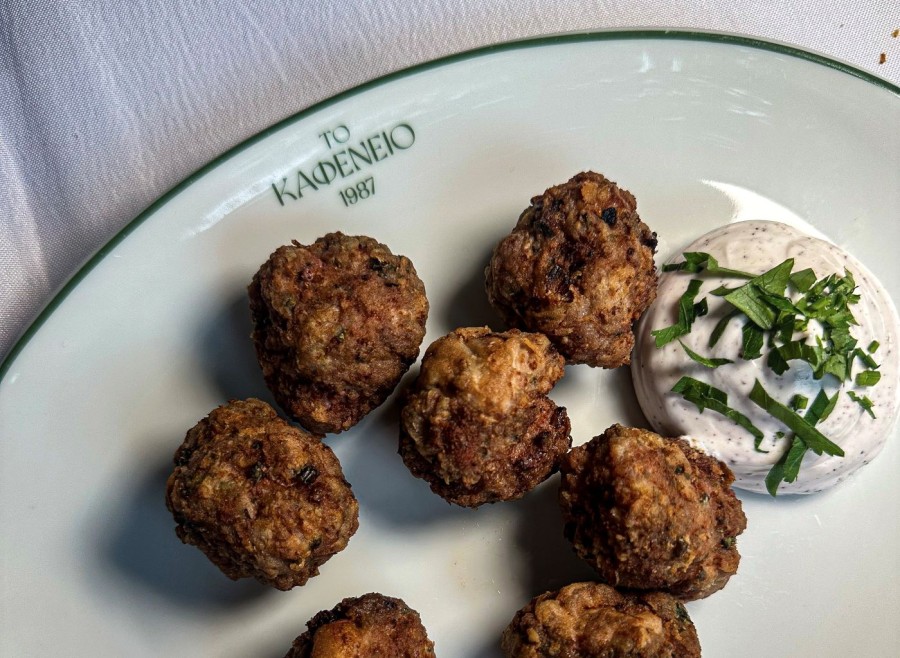
I tasted a wide range of the menu and came away convinced that the kitchen is doing thoughtful, serious work. The beetroot grilled over charcoal showed balance and depth, with an earthy, gently smoky character. The beef sausage from Ilia delivered pure, honest flavour, properly spiced, well textured and confidently seasoned. The meatballs were light and fluffy, fried with care and unmistakably comforting, the sort of home-style cooking that feels sincere rather than nostalgic.
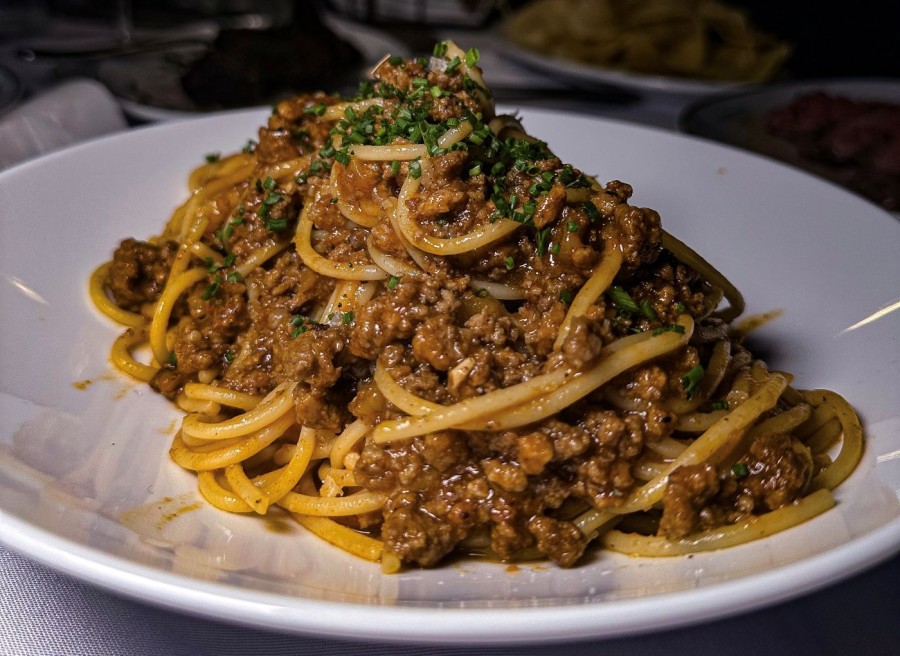
The standout dish, however, was the pasta with minced meat. Authentic, generous and increasingly rare. The mince was slow-cooked and deeply flavoured, the pasta properly cooked, the sauce cohesive and full. There was no attempt to modernise it, no unnecessary flourish. It was cooked exactly as it should be, without affectation. This is how a dish so loaded with memory ought to taste.
The mushroom stifado offered pleasing texture and a well-judged sauce, with sweetness from the onions and real depth. The batzina pie, a personal favourite, combined a rustic, pastoral character with sound technique, making it especially compelling. I also tried a slow-sautéed lamb with hilopites, which was genuinely sublime.
Do take a careful look at the wine list, where you will find several thoughtful choices. And bear in mind, as you order, that portions for some of the main dishes are particularly generous.
There is something almost reassuring about the success of a place like Kafeneio. In an urban fabric that changes at speed, constantly redesigning itself around new forms and ideas, the return of a space with history feels like an act of quiet grounding. This is not about a calculated retreat into the past, but about reconnecting with a foundation that remains alive, provided the right people are there to care for it.
And this daily influx of diners, particularly at lunchtime, has a clear explanation. People gravitate towards classic places like Kafeneio because they do not demand effort. They do not ask you to perform, or to prove anything. They allow you to sit at a table without assuming a role. And when the food carries within it the truth of Greek cooking, without exaggeration or display, the experience shifts from the superficial to the essential. This is not nostalgia for its own sake, but a connection with something that feels recognisably yours.
Seen this way, the “rescue” of such places is not only a shrewd business decision for those who understand the market, but also an act of cultural care. It is an acknowledgement that a city is built and sustained through spaces that function not merely as profit-making enterprises, but as vessels of collective memory.
So yes, Athens needs new openings and striking arrivals. But its identity is also shaped in restaurants that act as bridges between what we once were and what we are, supposedly, becoming.
Info: 26 Loukianou Street, Athens | Tel. +30 210 723 9600

Login or register to join the conversation