



Jazz kissa were born out of necessity. In the years after the war, as Japan was discovering Western culture, jazz records were a rare luxury. A single Miles Davis LP could cost nearly a month’s wages, prompting savvy entrepreneurs to open cafés where you could order a coffee and listen to John Coltrane without going broke. What began as a practical solution soon evolved into something much deeper, reaching its peak in the 1970s. At the height of the movement, more than 250 jazz kissa thrived across Tokyo; today, barely a hundred remain. Each one feels like a frozen moment in time.
Step into a jazz kissa and you realise immediately: this is not like other bars. Nor is it just another café. The room is dimly lit, lined with shelves of books and thousands of vinyl records. In pride of place sits an often impossibly expensive sound system, installed to deliver a sound so pure you feel every note as though it were being played live, just for you.
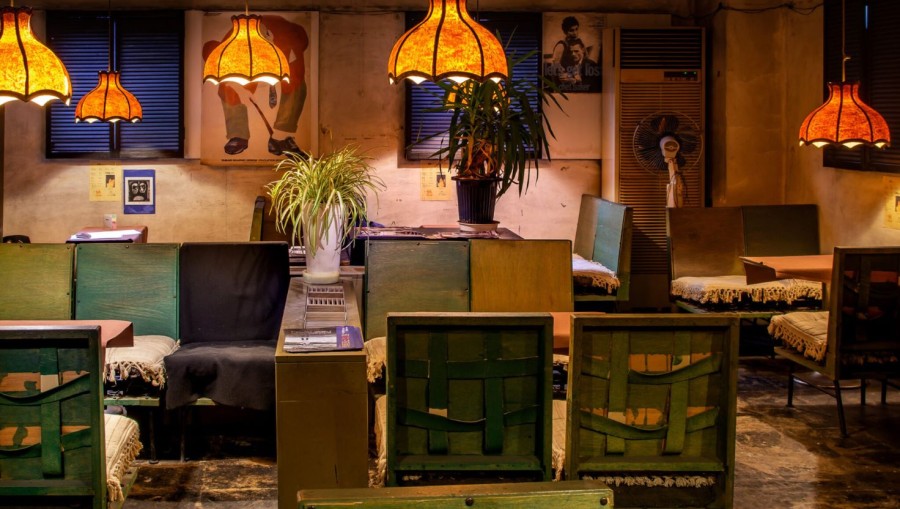
The master—that’s how the owner is known—is not there simply to serve drinks. (And yes, in the small, authentic jazz kissa that take themselves seriously, there is only ever one member of staff, and it’s always the master himself.) He is waiter, DJ, and above all, the high priest of jazz. He chooses the music, and you listen—no requests, no exceptions. At least, that’s how it works in the traditional, purist kissa. His philosophy is disarmingly simple: trust him. He has listened to more jazz than you could ever imagine, and every record in his collection has been chosen, one by one, with absolute devotion.
The relationship between jazz kissa and food is a complicated one. Traditionally, these venues don’t serve full meals but keishoku—loosely translated as “light snacks”. That might mean a simple toast, a bowl of rice, a sandwich or even a dessert. Essentially, it’s something to accompany your coffee or whisky. The simplicity isn’t about limiting your choices; it’s designed to ensure the food never distracts from the listening experience. In truth, it’s the perfect excuse to sit back, linger, and surrender yourself to the sound.
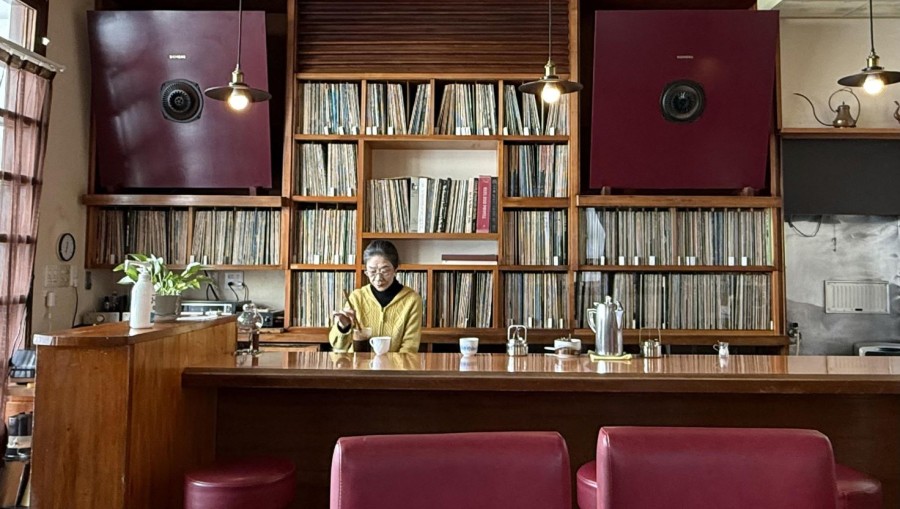
There’s something beautifully surreal about watching a dozen strangers sit in silence, each with their drink, listening to the same piece of music. No glances exchanged, no phones checked—just collective attention, all tuned to the same frequency.
At Otofuke, a tiny jazz kissa in Monzen-Nakacho tucked away at the back of a garage, the room seats no more than twelve. The owner has hand-built the sound system himself, complete with valve amplifiers and custom-made speakers. The name Otofuke translates literally as the night passes with music—and that is precisely what it delivers.
Then there’s Masako in Shimokitazawa, a legendary kissa that first opened in 1953, closed in 2009, and was reborn in 2020. Its famed almond toast—thick-cut bread baked with butter and slices of almond—has achieved cult status. Today, Masako is run by Moeko-san, a member of the much-loved band Minyo Crusaders.
Over in Jimbocho, Kissa Ko occupies an Edo-period wooden house that survived the war. Its approach to hospitality sets it apart: doors open from 7:30 a.m., with a focus on indulgent breakfast—an almost unheard-of luxury in the world of jazz kissa. Upstairs, on a small tatami-floored room furnished with authentic Japanese antiques, breakfast becomes an experience unlike any other.
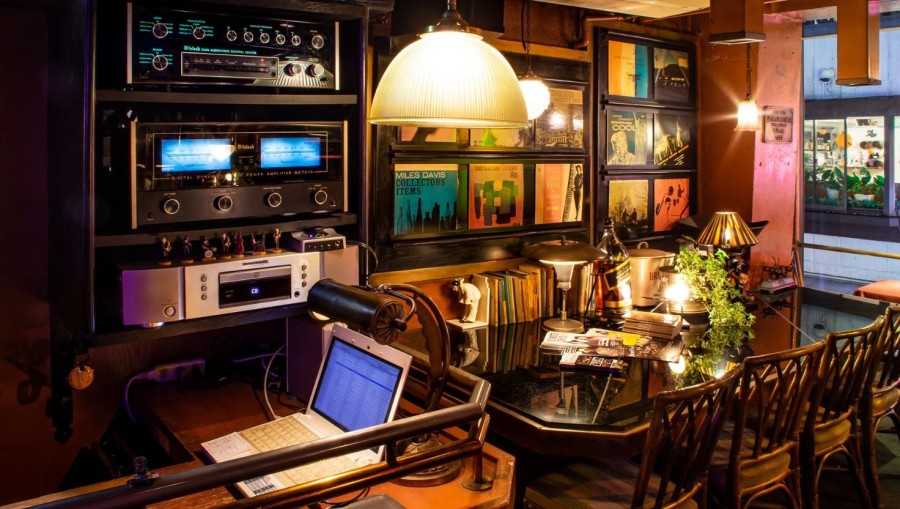
Among the most legendary of them all is DUG in Shinjuku, regarded by many as Japan’s most famous jazz kissa. Its owner once ran the equally iconic DIG, first opened in 1961 by the celebrated jazz photographer Hozumi Nakadaira, which sadly closed in 1983 when the building was demolished. With its cavernous ambience, dark brick walls and low lighting, DUG delivers one of the city’s most authentic jazz experiences.
Even Haruki Murakami—author of Norwegian Wood and Absolutely on Music—once ran his own jazz kissa, Peter Cat, long before he became a globally renowned novelist.
Narcise, tucked away on the second floor of a building in central Kabukicho, comes with a long history. Opened by the current owner’s father before the Second World War, it was once a haunt for writers and poets. In the 1970s it transformed into a jazz kissa, adapting to the mood of the era. Jazz Inn Uncle Tom has been running for forty-four years; today the owner’s son and widow manage the place. Hardcore jazz pours from the speakers while tables fill with an extensive selection of sake, and in the kitchen, exceptional sashimi is prepared. Eigakan, literally “cinema” in Japanese, opened in 1976. Its founder had worked in film production, and the space is adorned with posters from across the world. The sound system here—assembled over decades—is rumoured to be the finest in all Tokyo, making Eigakan a pilgrimage for audiophiles.
In a world of fifteen-second videos, jazz kissa stand their ground. Visiting them isn’t about nostalgia, nor is it a passing hipster affectation. It’s proof that some people still believe in the power of an experience that demands patience and focus. They invite you to inhabit a piece of music from beginning to end. A single track might last twenty minutes, and here you will hear it all—every phrase, every modulation, the unfolding of a musician’s thought until it arrives somewhere entirely unexpected. And when the needle lifts and that unmistakable crackle of vinyl fills the silence, there’s a shared moment where everyone in the room exhales together.
- 0 - 4
- Poor
- 4.5 - 5
- Average
- 5.5
- Acceptable
- 6 - 6.5
- Good
- 7 - 7.5
- Very Good
- 8 - 8.5
- Outstanding
- 9 - 10
- Excellent
| 0 - 4 | 4.5 - 5 | 5.5 | 6 - 6.5 | 7 - 7.5 | 8 - 8.5 | 9 - 10 |
| Poor | Average | Acceptable | Good | Very Good | Outstanding | Excellent |
| *"arrow-symbol": the up arrow to the right of the rating, if it appears, symbolizes a restaurant that is close to moving up to the next ranking rung. | ||||||



Login or register to join the conversation