Verona is not only one of Italy’s most elegant and beautiful cities, but also the natural capital of one of its most celebrated wine regions. The vineyards of Valpolicella are the birthplace of Amarone, the famously powerful red made by fermenting grapes that have first been partially dried through the traditional appassimento process.
The concentration, strength and remarkable ageing potential of great Amarone della Valpolicella, which in some cases can exceed 17% alcohol, helped establish its formidable reputation on the international wine scene long before many Italian reds achieved the global recognition they enjoy today.
The Tedeschi family had already placed its faith in this land by the early 17th century, but its rise to the highest ranks of Amarone producers came in the 1960s, when Lorenzo “Renzo” Tedeschi took the helm.
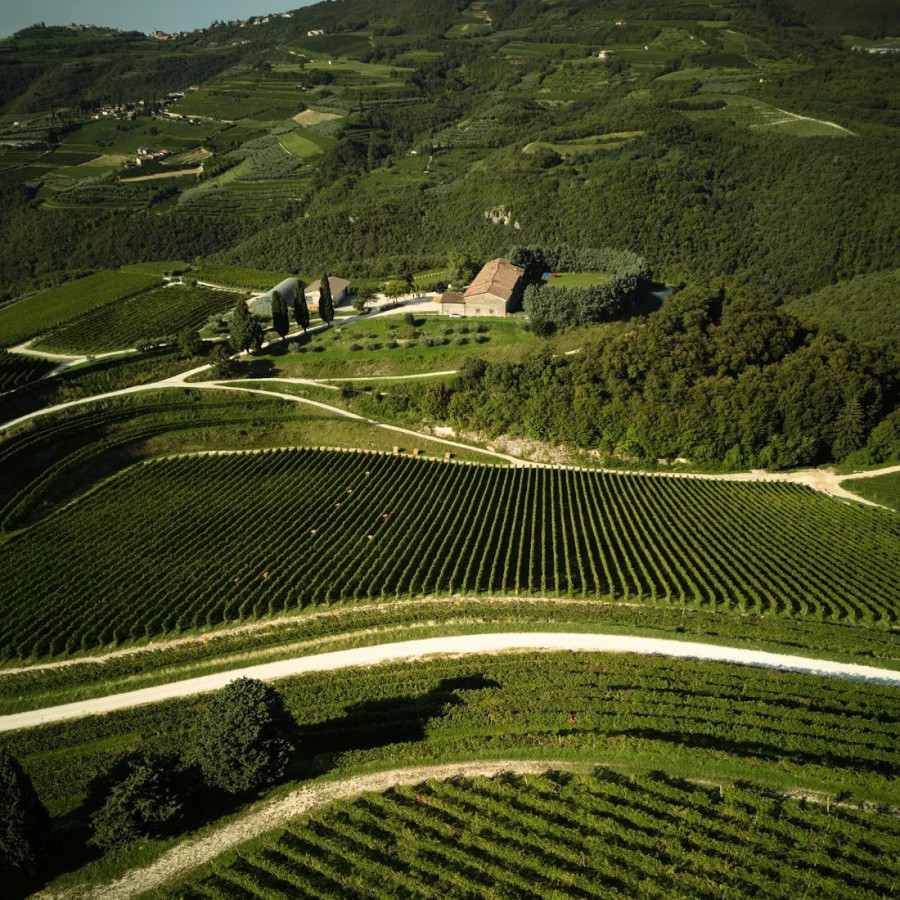
The foundations, however, had been laid in 1918, when the family acquired what would become the jewel in the crown of its vineyard holdings: Monte Olmi, a 2.5-hectare terraced cru in the heart of Valpolicella Classica. In the early 1960s, Lorenzo Tedeschi took the pioneering decision to vinify its grapes separately, and from 1964 Capitel Monte Olmi became one of the first single-vineyard Amarone wines in the region.
That crown now includes other precious jewels, notably the Maternigo and La Fabriseria crus, further reinforcing Tedeschi’s long-standing focus on vineyard identity and terroir.
The recent arrival of Tedeschi’s wines in Greece through Ombra Wines gave me the opportunity to taste several of its reds and, rather unusually for me, to find myself in complete agreement with the celebrated critics and respected institutions that consistently reward the Tedeschi family’s work with exceptionally high scores and distinctions. Naturally, these wines are built around the indigenous red varieties of Verona, with Corvina, Corvinone and Rondinella playing the leading roles.
These indigenous grapes, combined with the region’s relatively humid terroir, help preserve remarkable freshness and finesse, qualities that come through clearly even in the estate’s more straightforward wines. That said, the Nicalò 2023 (8/10), despite carrying the comparatively modest Valpolicella Superiore DOC designation, is anything but simple. It is not only the 12 months spent ageing in Slavonian oak that sets it apart, but also the concentration of dark fruit and floral notes, its generous, supple structure built around 13.5% alcohol and ripe tannins, and a finely peppery finish. Taken together, these qualities place it well ahead of the great majority of wines in its category.
When a Valpolicella already offers this much concentration, it is natural to wonder whether Ripasso can bring anything more to the table. The style is created by refermenting Valpolicella on the skins and lees left from Amarone production, adding further depth, structure and complexity. The single-vineyard San Rocco Valpolicella Superiore Ripasso DOC 2022 (8.5/10) shows that it certainly can. It offers a dense nose of chocolate and sage, a full, firmly tannic palate and a beautifully floral finish.
Amarone represents the pinnacle of Valpolicella, and stylistically it can broadly be divided into two schools. The traditional style tends towards deep notes of molasses and chocolate, an opulently rich palate and tremendous volume, while the more modern interpretation places greater emphasis on fruit, freshness and tension, without sacrificing the concentration that comes from drying the grapes.
Today, leading producers may lean towards one style, the other, or something in between. But when Tedeschi’s Amarone wines are poured side by side, it becomes clear that this exceptional estate is capable of excelling at both.
The Amarone della Valpolicella DOCG “Marne 180” 2022 (9/10) fills the glass with notes of minerality, ink and lily. Its profile is unmistakably modern, yet this is still Amarone in full: rich, expansive and impressively long, with 16% alcohol providing plenty of power under the bonnet.The Amarone della Valpolicella DOCG “Ansari” 2019 (9/10) takes its name from the first two letters of Antonietta, Sabrina and Riccardo Tedeschi, while the wine itself is sourced from several vineyards across the Valpolicella hills. Darker and softer than the Marne, it gives centre stage to aromas of damp woodland and molasses. And at 16.5% alcohol, it takes the meaning of full-bodied one step further.
Looking for the ultimate old-school expression of the appellation? Then simply sink the corkscrew into the long cork of the Amarone della Valpolicella Classico Riserva DOCG “Capitel Monte Olmi” 2019 (9/10). The grapes from this celebrated cru are dried for four months, just as they are for the other Amarone wines, but the ageing is extended to four years in Slavonian oak, followed by a further 12 months in bottle. The result almost redefines terms such as concentration, body, “blockbuster” and ageing potential, seasoning all of them with generous notes of tar and molasses.
The Amarone della Valpolicella Classico Riserva DOCG “La Fabriseria” 2016 (9/10) receives similarly meticulous treatment. This is Tedeschi’s flagship cuvée, at least in price terms, sourced from the estate’s approximately seven-hectare La Fabriseria vineyard and produced only in exceptional vintages. And when Tedeschi says “only”, it means it. Since 1983, La Fabriseria has been released in just a handful of vintages. This 17% powerhouse is intoxicating before it even reaches the palate, with a bouquet of black berries, molasses, tar and Muscovado sugar. Rich, sweetly fruited and powerfully tannic, it is so concentrated that a single sip feels almost capable of standing in for an entire meal.
The way Amarone is made, which in some respects resembles the production methods used for our own sweet wines, may lead some to assume that these wines are almost bound to be good.
To a large extent, that is true. But the distance between good and great can be every bit as significant as the distance between good and bad. Tedeschi is one of the producers that turns that greatness into something tangible, creating wines that help explain why Amarone della Valpolicella ranks among the world’s truly great wines.
Tedeschi wines are imported into Greece by Ombra Wines, +30 210 6711320.