The next chapter of Greek tourism is no longer a promise for the future. It is a transformation already under way. The world’s leading international hotel brands are investing in Greece, historic hotels are being reimagined, and destinations once associated primarily with holiday homes or seasonal tourism are evolving into hubs of international luxury hospitality.
Four Seasons is strengthening its presence in Greece, from Athens to Mykonos and Porto Heli. One&Only has already established two resorts with distinctly different identities in Athens and Kea, while Hilton is expanding through Conrad and investing in the future potential of Waldorf Astoria and Waldorf Astoria Residences. Mandarin Oriental is preparing its next major move at The Ellinikon, following its successful presence in Messinia, while Rosewood and Fairmont are making high-profile debuts in Crete.
At the same time, Six Senses is developing a new resort in Ermionida, Banyan Tree is tied to the Varko Bay project in Western Greece, while St. Regis is being strongly linked with a potential new presence at Costa Navarino. In Mykonos, the arrival of Fouquet’s in summer 2026 confirms that interest from international hospitality groups extends well beyond the traditional hotel brands.
Amanzoe naturally belongs on the same map, having already established itself as a benchmark for ultra-luxury hospitality in the Mediterranean.
What is most interesting, however, is not simply the names themselves. These investments reflect a deeper transformation in Greece’s tourism offering. Architecture, gastronomy, wellness, privacy, personalised service and branded residences are taking centre stage, while the very idea of a destination is expanding beyond the boundaries of the hotel itself.
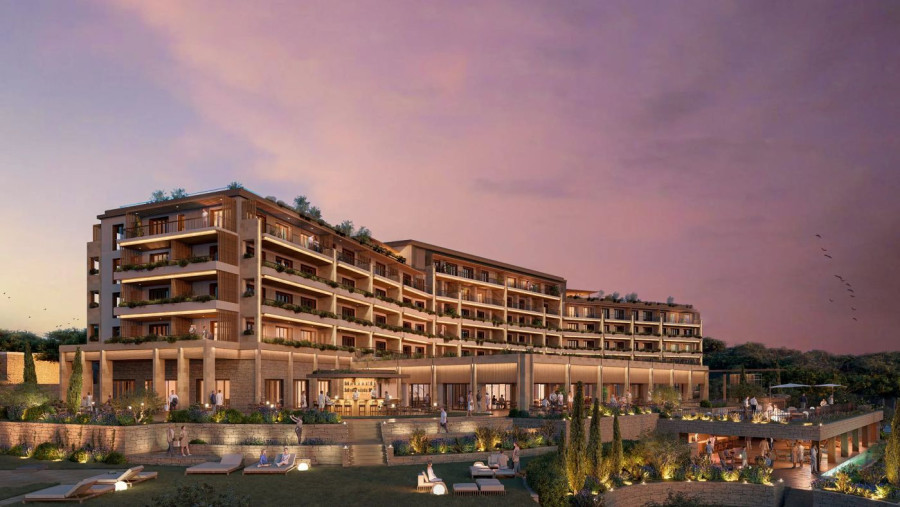
Four Seasons: From Astir Vouliagmeni to Mykonos, Porto Heli, Santorini and Corfu
Four Seasons is perhaps the clearest example of the momentum Greece is gaining in the international luxury hospitality market.
It began with the Four Seasons Astir Palace Hotel Athens in Vouliagmeni. The revival of Astir repositioned the Athens Riviera on the international map and demonstrated that Athens can combine urban life with a fully fledged, high-end seaside experience. Its restaurants, beaches, wellness facilities and natural setting created a model that goes far beyond the traditional idea of a city hotel.
In summer 2026, Four Seasons Hotel Mykonos made its debut at Kalo Livadi Bay. The hotel officially opened in July and unfolds across an impressive six-hectare site, with rooms, suites and villas overlooking the Aegean. The architectural design is by Nikos Valsamakis, drawing on the traditional architecture of Mykonos. A private beach, two infinity pools and a collection of restaurants and bars complete the experience, while the location combines a sense of seclusion with easy access to Chora and the island’s nightlife. The new property is the second Four Seasons hotel in Greece.
Particularly significant is the Four Seasons Resort and Residences Porto Heli at Hinitsa Bay. The project will transform an existing beachfront property into a resort with 80 rooms and suites, around 30 bungalows and private branded residences. Its extensive coastline, views towards Spetses and relatively easy access from Athens create the conditions for a destination designed to appeal both to international visitors and to owners of luxury residences. This development is set to significantly strengthen Porto Heli’s position in the international luxury travel market.
In Santorini, Four Seasons has been linked with one of the island’s historic hotels. The prospect is particularly significant, as it would bring the brand to the heart of one of Greece’s most internationally recognisable destinations. What is perhaps most striking, however, is the scale of the initial development. According to market sources, the hotel would have fewer than 20 keys at first, with the possibility of additional villas being added at a later stage.
Similar reports have linked Corfu with a future Four Seasons expansion. No opening date has been announced, but the project is understood to involve an entirely new development, with purpose-built structures rather than the redevelopment of an existing property, as has been the case with the brand’s other projects in Greece to date.
The broader Four Seasons strategy nevertheless points to the creation of a network of destinations with distinct identities: urban luxury in Athens, cosmopolitan island escapes in Mykonos and Santorini, and a greater emphasis on privacy in Ermionida and Corfu.
One&Only: Glyfada, Kea and Mykonos
One&Only already has a presence in Greece with two resorts aimed at different audiences, each offering a distinct interpretation of luxury hospitality.
One&Only Aesthesis, at Asteria Glyfada, brings a historic stretch of the Athens Riviera into a new era. Architecture inspired by the cosmopolitan Athens of the past is combined with contemporary facilities, restaurants, beach experiences and the Guerlain Spa. Its location allows guests to enjoy a genuine resort setting without losing touch with the cultural life and infrastructure of the capital.
One&Only Kéa Island takes a different approach. On Kea, the resort places particular emphasis on private villas with their own pools. Easy access from Attica, a strong sense of seclusion and the natural Cycladic landscape create an experience for guests seeking privacy and a high level of service without travelling too far from Athens.
The third destination to have been linked with One&Only’s expansion strategy in Greece is Mykonos. The prospect of another resort from the brand on the island has recently returned to the agenda, although the project’s timeline does not appear to have been finalised.
If it goes ahead, a One&Only presence in Mykonos would complete a strategy spanning three distinct experiences: the seaside lifestyle of the Athens Riviera, the seclusion of Kea and the cosmopolitan character of Mykonos.
Conrad: A New Era for the Athens Hilton and a New Presence in Corfu
Hilton is strengthening its presence in Greece through Conrad, one of the group’s leading luxury brands.
Conrad Athens The Ilisian opened on 23 April 2026, marking a new chapter for the historic Hilton Athens. With 278 rooms and suites, a collection of restaurants and bars, extensive wellness facilities and private residences, the hotel forms the centrepiece of the wider The Ilisian development.
The significance of the investment goes far beyond the renovation of an iconic hotel. The Ilisian functions as a fully integrated destination for both visitors and Athens residents, bringing together accommodation, gastronomy, wellness, social events and urban life.
The next major step is Conrad Corfu, on the island’s southern coast. Conceived as a beachfront resort, it will feature 136 rooms, suites and villas, three restaurants, two bars, extensive wellness facilities and a range of family-oriented experiences. Its architectural approach is designed to combine the brand’s contemporary standards with references to Corfu’s Venetian and neoclassical heritage.
Corfu already enjoys strong international recognition, but the arrival of a resort of this calibre is set to strengthen its position further in the luxury travel market. Conrad Corfu is scheduled to open in spring 2027.
Mandarin Oriental: From Messinia to The Ellinikon, Raising the Bar Even Higher
Mandarin Oriental is one of the clearest examples of Greece’s growing importance in the international luxury hospitality market.
Mandarin Oriental, Costa Navarino, which opened in 2023, marked the group’s first presence in the country. Set on Navarino Bay, the resort combines architecture designed to sit harmoniously within the Messinian landscape with gastronomy, wellness and highly personalised service. With 99 suites and villas, many with private pools, it has established itself as one of Costa Navarino’s leading luxury hospitality offerings.
The success of the project raises expectations for the group’s second property in Greece, Mandarin Oriental, Athens, which is planned for the seafront at The Ellinikon as part of the major redevelopment of the site.
According to the announced plans, the hotel will feature 123 rooms and suites, along with 17 branded residences, including beachfront villas and apartments. Gastronomy, wellness facilities and spaces for social events will form key elements of the offering, while its proximity to Agios Kosmas Marina and views across the Saronic Gulf further enhance the appeal of the project.
Following the success of Costa Navarino, expectations for Mandarin Oriental, Athens are understandably high. The new hotel will be expected to meet the standards of one of the world’s most recognisable luxury hospitality groups, while also responding to the ambitions of one of Europe’s largest urban regeneration projects.
This will not simply be another luxury hotel in Athens. If delivered as planned, it has the potential to become a new international landmark on the Athens Riviera, bringing together accommodation, gastronomy, wellness and branded residences in a setting that could redefine the city’s relationship with the sea.
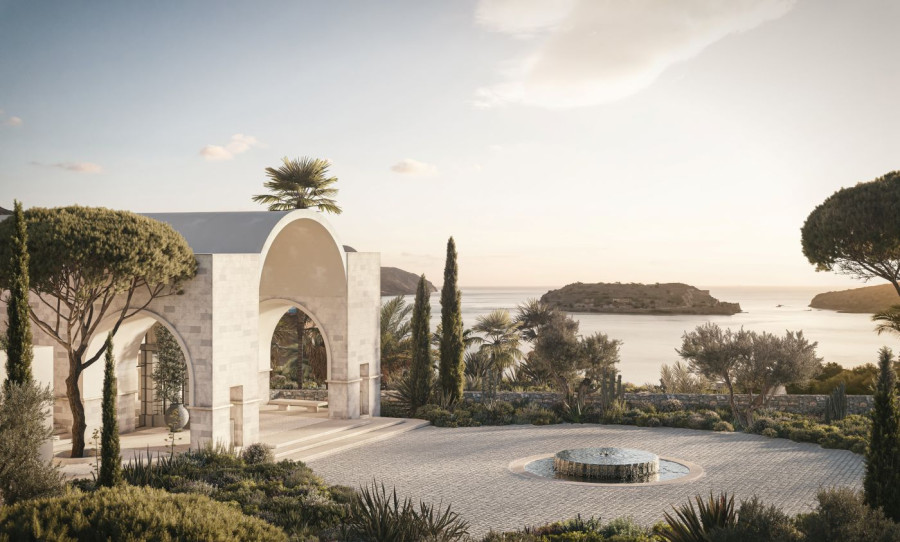
Rosewood Blue Palace: A New International Landmark for Crete
Rosewood’s arrival in Greece through Rosewood Blue Palace is set to be one of the most significant forthcoming developments in the country’s luxury hospitality sector.
The historic Blue Palace in Plaka, Elounda, is due to reopen as a Rosewood property in 2027 following a complete reimagining. The new resort will feature 154 rooms and suites, 85 of them with private pools.
The design has been entrusted to Greek architecture and design practice K-Studio, while the resort’s culinary offering will revolve around six restaurants and bars. Asaya, Rosewood’s holistic wellness concept, will also play a central role, with spa, yoga, fitness and hydrotherapy facilities.
Rosewood’s philosophy, which places strong emphasis on a sense of place and engagement with local culture, feels particularly well suited to Elounda’s long-standing identity as a luxury holiday destination. The challenge will be to preserve the recognition of the Blue Palace name while repositioning the property within an increasingly competitive market.
For Crete, Rosewood’s arrival represents more than simply the addition of another luxury hotel. It is an opportunity to strengthen the island’s position at the very top end of the international market, with a hospitality offering centred on architecture, gastronomy, wellness and highly personalised service.
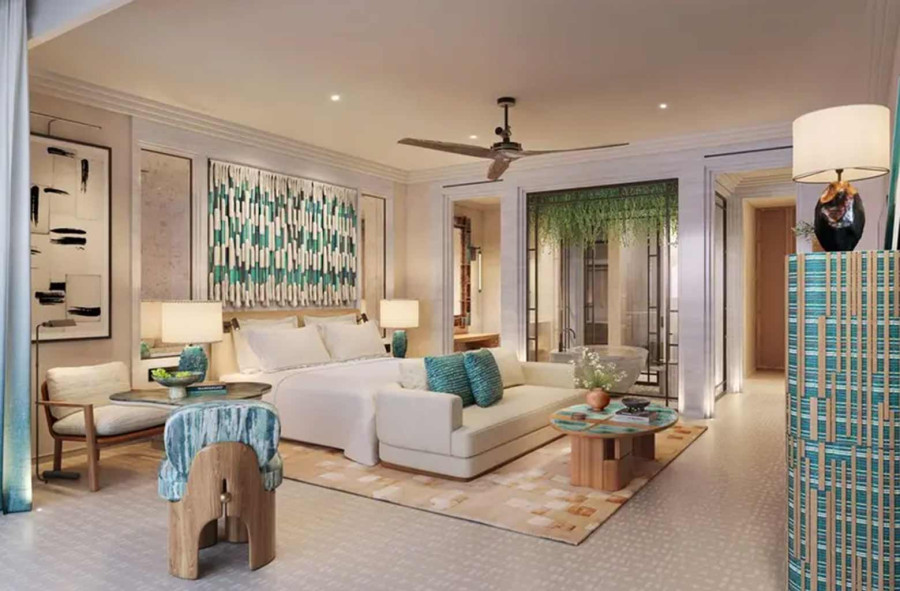
Fairmont Chania: A New Chapter for Western Crete
Fairmont, Accor’s luxury hotel brand, is preparing to enter the Greek market with Fairmont Chania Resort.
The project is being developed west of Chania in partnership with Hersonissos Group Hotels. According to the announced plans, the resort will feature 104 rooms and suites, with opening currently scheduled for 2029.
It will include restaurants and bars, a beach club, wellness facilities, dedicated spaces for children and teenagers, as well as venues for events and weddings. The architectural and interior design has been entrusted to international creatives, with the aim of combining Fairmont’s aesthetic with the history and character of Chania.
Fairmont’s arrival will be an important addition to western Crete, a region with considerable natural and cultural appeal as well as strong potential for developing new experiences beyond the traditional summer tourism model.
The challenge will be to combine international hospitality standards with a genuine sense of place, allowing the new resort to develop an identity of its own and become a point of reference for the region.
St. Regis: A New Chapter for Costa Navarino
Costa Navarino has established itself as one of Greece’s leading integrated tourism destinations. The development of hotels, golf courses, restaurants and sports facilities has transformed Messinia’s tourism profile and created a model that extends far beyond the boundaries of a single resort.
Against this backdrop, the prospect of St. Regis entering Costa Navarino is particularly significant. Reports suggest that the project would involve the renovation and rebranding of an existing hotel property.
Part of Marriott International, St. Regis is known for its personalised butler service, high standards of hospitality and distinctive design identity. A potential presence in Messinia would add a new dimension to Costa Navarino’s already strong luxury offering.
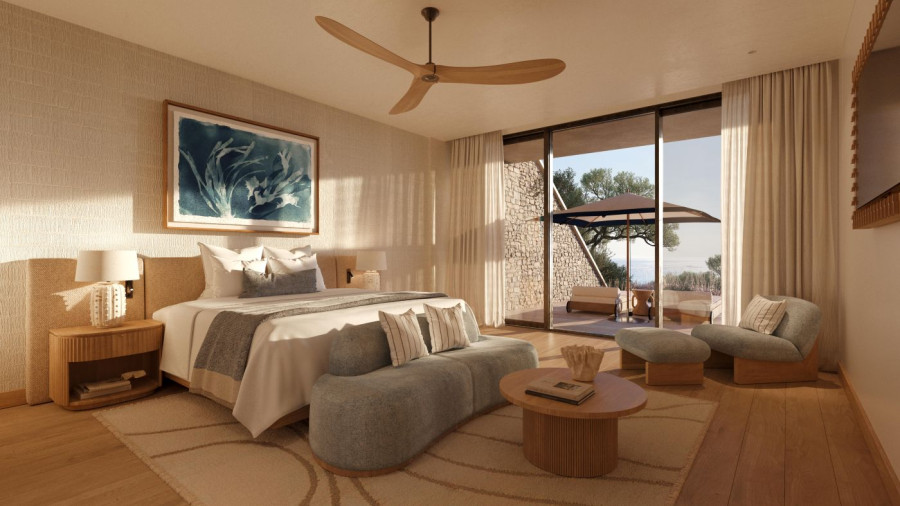
Six Senses Porto Heli: Wellness and Architecture in a Secluded Bay
Six Senses Porto Heli is one of the most significant forthcoming developments in the wider Ermionida region. The resort is currently scheduled to open in 2028 and is being designed around the brand’s philosophy of combining luxury with wellness and sustainability.
The plans include around 60 rooms and suites, a three-bedroom retreat villa and 12 branded residential villas with between five and eight bedrooms. The architecture is designed to blend into the landscape of a private bay, preserving a strong sense of natural seclusion.
The culinary offering will include a beachfront restaurant, a sunset bar and a traditional Greek kafeneio, while an organic garden, beach club, spa and facilities for water sports are also planned.
Six Senses will therefore bring a distinctly different proposition to Ermionida, with a stronger emphasis on holistic wellness, sustainable design and immersion in the natural environment. In a region attracting an increasing number of international hospitality brands, the ability to offer a genuinely differentiated experience will be crucial.
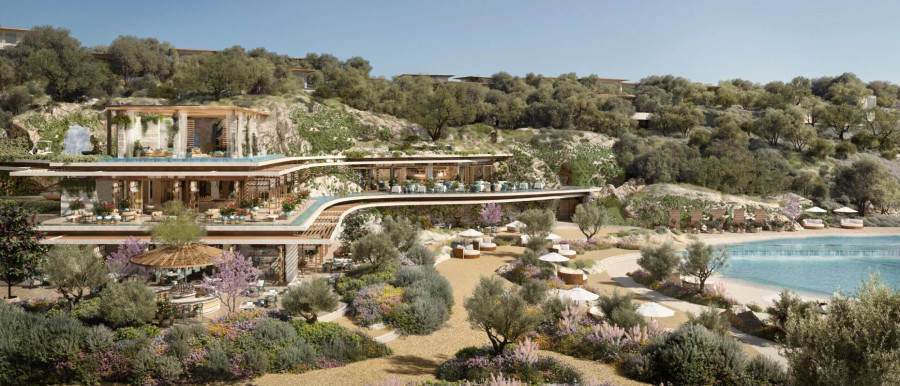
Banyan Tree: A Major New Arrival in Greece
Banyan Tree Varko Bay stands out as a particularly significant project, as it represents one of the earliest expansions of the Banyan Tree brand in Europe.
The resort is planned for an area of exceptional natural beauty in Peloponnese. Banyan Tree’s philosophy, centred on privacy, wellness and a close connection with the natural environment, aims to create a new ultra-luxury destination away from Greece’s more established tourism markets.
The significance of the project extends beyond the arrival of another international brand. It also signals the growing interest in parts of Greece that have so far remained outside the country’s best-known luxury hospitality destinations. If successful, Varko Bay could help place this stretch of Western Greece more firmly on the international high-end travel map.
Fouquet’s Mykonos: French Art de Vivre Meets the Cyclades
Another major name was added to Greece’s luxury hospitality map in summer 2026. Fouquet’s Mykonos opened in June, marking the first presence in Greece for the French Barrière Group. The project was developed in partnership with Yoda Group and is operated by Barrière under a management agreement.
Set in Paraga, the hotel brings a different interpretation of luxury to Mykonos, drawing on French hospitality traditions, gastronomy and cosmopolitan living. The Fouquet’s identity, internationally associated with Paris and other major destinations, is reinterpreted here through a refined aesthetic that responds to the character of the Cycladic landscape.
Its arrival confirms that Mykonos continues to attract international brands seeking a presence in one of the Mediterranean’s leading luxury destinations. At the same time, it further intensifies competition on the island, where luxury is no longer defined simply by views and location, but increasingly by gastronomy, wellness and the overall hospitality experience.
Waldorf Astoria: A Major Investment in Ermionida
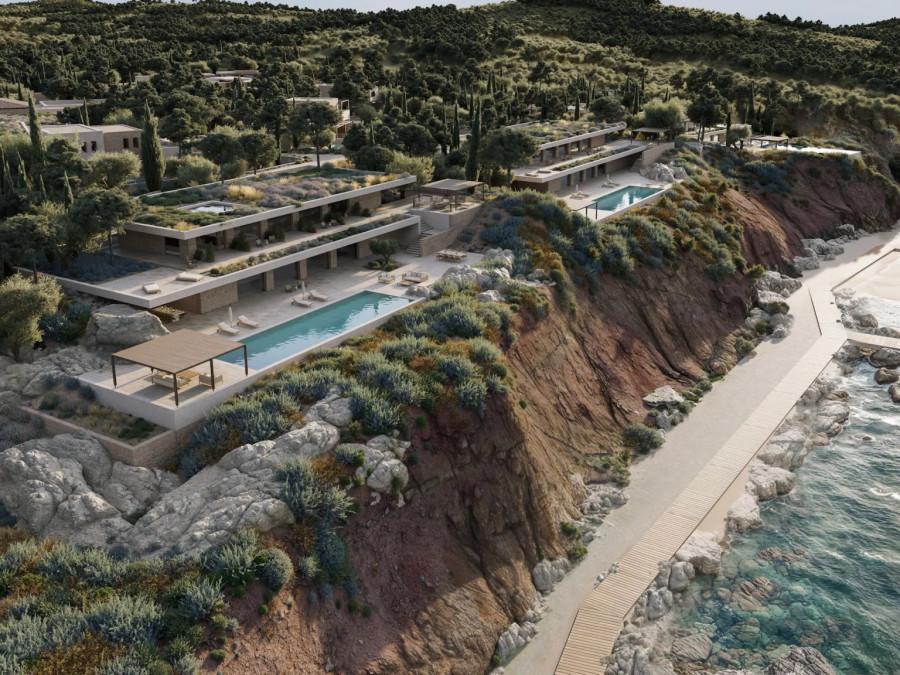
In the wider Ermionida region, Waldorf Astoria, another of Hilton’s luxury brands, has been linked with the redevelopment of the former Ermioni Club.
The project involves the creation of a large-scale integrated resort combining hotel accommodation with private residences. Published reports have linked the investment with capital from the United Arab Emirates and with a development of considerable scale.
The prospect of a Waldorf Astoria in such a relatively compact area would further strengthen Ermionida’s position as one of Greece’s most important emerging hubs for ultra-luxury hospitality.
At the same time, the development could give further momentum to the branded residences market, a model that combines private ownership with the services, facilities and standards of an international hotel brand.
The project has, however, faced delays and still does not have a definitively confirmed opening timetable.
Amanzoe: Ermionida’s Established Benchmark for Ultra-Luxury Hospitality
No discussion of the growth of ultra-luxury tourism in the area would be complete without Amanzoe, near Kranidi.
The Aman resort is already one of the most recognisable examples of ultra-luxury hospitality in Greece. Its architecture, with references to classical Greek forms, its emphasis on privacy, private pools, residences and highly personalised service have created an experience aimed at an exceptionally discerning international clientele.
Although Amanzoe is not a future project but an already established benchmark, it is essential to understanding how Ermionida has evolved as a luxury travel destination.
Its presence alongside the new Four Seasons and Six Senses developments, and potentially Waldorf Astoria if that project goes ahead, is creating a particularly interesting dynamic for the area. Porto Heli, Hinitsa, Kranidi and the wider Ermionida region are now at the centre of a wave of investment that could significantly reshape its tourism profile.
Proximity to Athens, access by private yacht, the nearby islands of Spetses and Hydra and the existing concentration of large private residences all create the conditions for a destination that continues to evolve around a very specific international audience.
The real challenge is for the region to develop not simply more hotels, but a coherent destination identity, supported by gastronomy, maritime experiences, wellness services and the infrastructure needed to sustain activity throughout the year.
Greece in the New Global Luxury Market
The picture that is emerging is clear: Greece is becoming an increasingly important growth market for the world’s leading international hotel brands.
Athens is strengthening its role as an urban luxury destination. Mykonos remains a major focus of international interest, Kea offers a more private Cycladic experience, Crete is welcoming new arrivals from Rosewood and Fairmont, while Corfu is set to strengthen its luxury offering with Conrad and the prospect of Four Seasons.
Messinia has already demonstrated that it can support an integrated model of luxury tourism, while The Ellinikon aims to create a new benchmark for urban hospitality with Mandarin Oriental. At the same time, Ermionida is emerging as one of the most interesting concentrations of ultra-luxury investment in Greece.
The challenge is not simply to attract international names. It is to create a sustainable model of development built around high standards of service, protection of the natural environment, appropriate infrastructure and a meaningful connection with local economies.
Luxury, after all, is not defined solely by a hotel’s architecture or the name above its entrance. It is defined by the overall experience, the quality of service, gastronomy, authenticity and a destination’s ability to offer something genuinely distinctive.
The next chapter of Greek tourism will not be judged simply by how many brands arrive in the country. What will matter is whether they genuinely enhance the visitor experience and help create destinations with lasting international recognition.
One thing is certain: competition at the top end of Greek hospitality has entered a new era. The real challenge now is for Greece to capitalise on this momentum while preserving the natural and cultural assets that made it one of the world’s most desirable destinations in the first place.