In 1930, the Neapolitan tailor, in defiance of the influences from England, France and Spain and the dominant men`s clothing of the time, created the new rules governing Italian elegance
From the early 20th century until the 1930s, the Neapolitan aesthetic was influenced by a mixture of English, French, and Spanish styles. Naples, one of the most elegant cities in Italy, was a hub for well-tailored clothing. During these three decades, the Neapolitan style, despite its different climate and strict style, had acquired similarities mainly with the dress of the British. However, this was about to change with the emergence of Vincenzo Attolini.Vincenzo Attolini, a young tailor who believed that a good craftsman is the one who creates proper clothes for imperfect bodies, decided to take matters into his own hands. So, he designed a jacket with incredible perfection and details with completely different finishes from what had been customary until then. He created a silhouette with a slimmer waist, longer sleeves, and minimal bulk in the shoulders, unlike what was on the market at the time. A jacket that, until the sixties, was still considered an alternative and was finally established as a standard in the `90s. Vincenzo`s secret was removing unnecessary details, leaving only the necessary ones that made the garment light and flexible, almost like a shirt. The disarming level of simplicity of construction made the British style look like something profound out of the past.
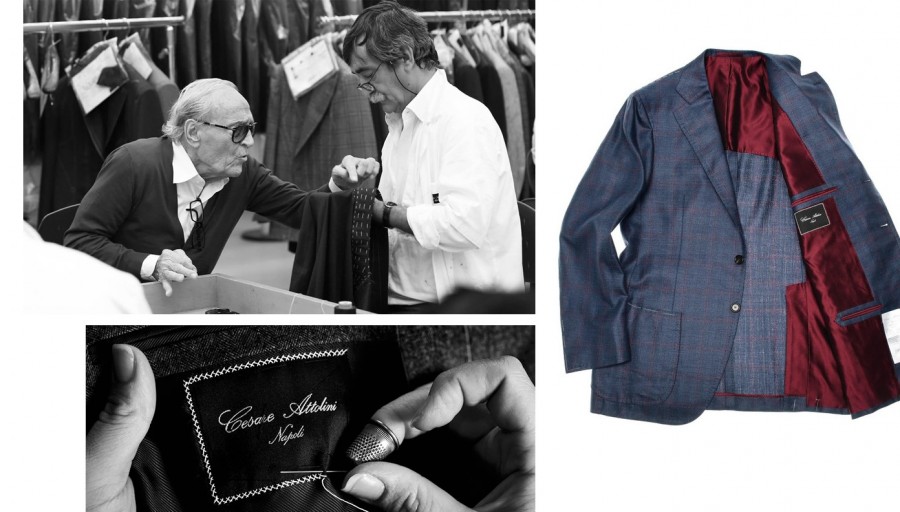
No tailor had been so bold in years past. At the same time as the country`s visual arts, a revolutionary in Italian menswear was experiencing the advent of Futurism and the apotheosis of one of its principal exponents, Umberto Boccioni. The young Vincenzo created the opportunity for new practicality, a redemptive lightness, and a wholly enhanced image of man and his real needs. His scissors could create wondrous cuts and hitherto unusual shapes in the jacket`s pockets, sleeves and lapels. A transition from a man dressed elegantly for etiquette purposes to one dressed to express himself. Able to freely enjoy the alluring taste of his spontaneity.
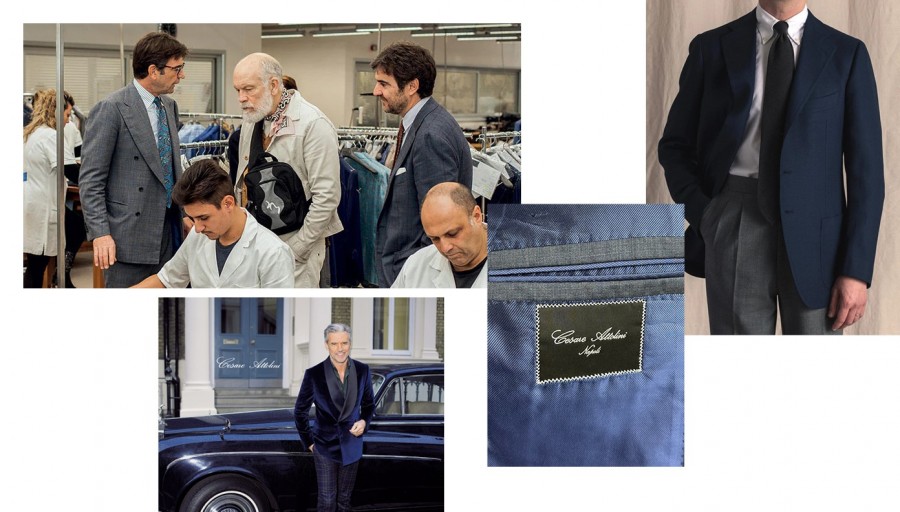
The reputation of his bold creativity soon spread in the following decades, and many realized the importance of his art. Day after day at Visa Vetriera`s atelier in Naples, the number of visitors increased for a "pilgrimage" to Maestro Vincenzo. Vittorio de Sica, Marcello Mastroianni, Clark Gable, and even King Vittorio Emanuelle III were his clients, and more recently, John Malkovich, who has even visited the Naples atelier because of his admiration for the house. The Duke of Windsor, who could hardly part with his clothes sewn by English tailors, stopped a passer-by in Kapri, as rumour has it, to ask him who had sewn his jacket, an Attolini creation that impressed him.Totò, a famous Italian actor of the time, was a great friend of Vincenzo. As Cesare Attolini, the son of the great tailor and later successor of the house, recalls, he often visited the atelier and "argued" with his father about various artistic subjects, but also to admire him at work since he considered him a great creator. Nowadays, Cesare Attolini has 130 tailors on staff, each with its separate area, and everything from cutting and choosing the fabric to sewing the buttons is considered an essential part of the process that takes 25-30 hours. Even the resting stage of the fabric during the process is vital as it allows the fabric to relax, ensuring there are no measurement issues after the cutting and sewing stages.